For decades guitarists all over the world have fiercely debated a hot topic: What is the greatest guitar solo ever? Currently there is an illustrious list of big hitters at the very top. The likes of Jimmy Page’s awe-inspiring solo on Stairway to Heaven and David Gilmour’s dreamy performance on Comfortably Numb frequently appear on these star-studded lists, however, for me I have always been drawn to a solo that appears a little further down.
Lynyrd Skynyrd’s Free Bird.
A seemingly never-ending descent into Rock and Roll hellfire, this guitar solo has always done something different for me than the others. Whilst Gilmour’s piece delicately touches the ears with an almost astral-like projection of pleasing chords, Lynyrd Skynyrd slam on the accelerator in a wild fashion as they franticly show us just how much can be done with six strings – or 12 in this case, but we’ll get back to that later.
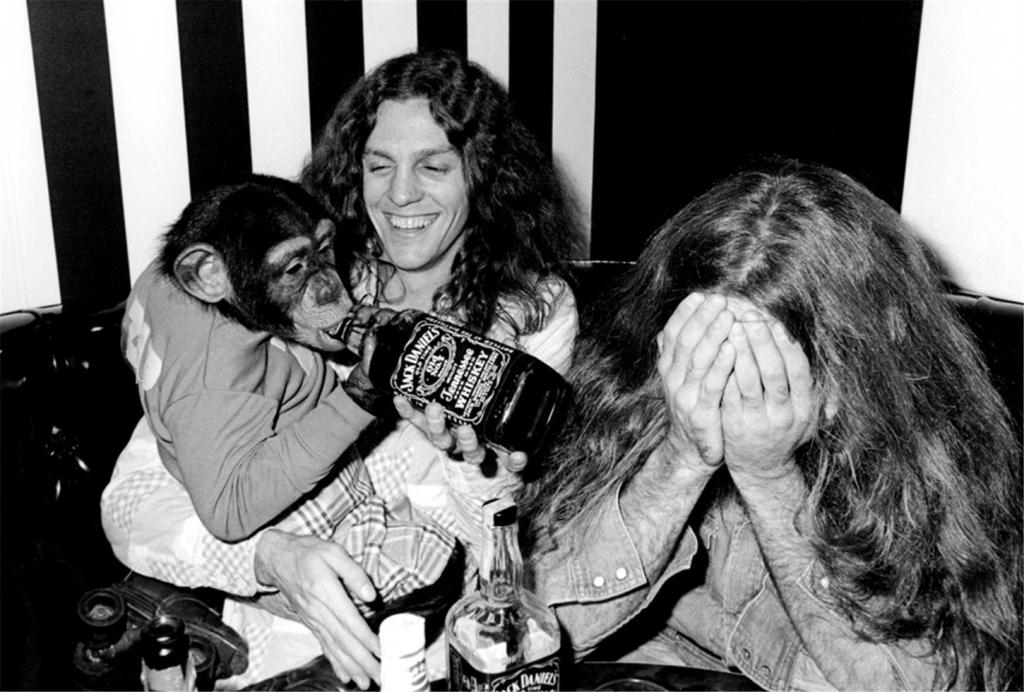
When one of the band’s guitarists, Allen Collins, first presented the song to lead singer Ronnie Van Zant it was met with cold rejection. Zant said it had too many chords to try and write lyrics for, feeling anything he sang would get lost in the tornado of chord changes and harsh licks. Eventually Zant warmed to the idea, yet the track was much slower, (more of a rock ballad than anything else) and the giant runtime was sliced down. Concert after concert the band wrapped it up after four or five minutes, lending the song a more sorrowful tone. If you listen to the first five minutes of Free Bird, you can’t help but sense this feeling that there should be more around the corner.
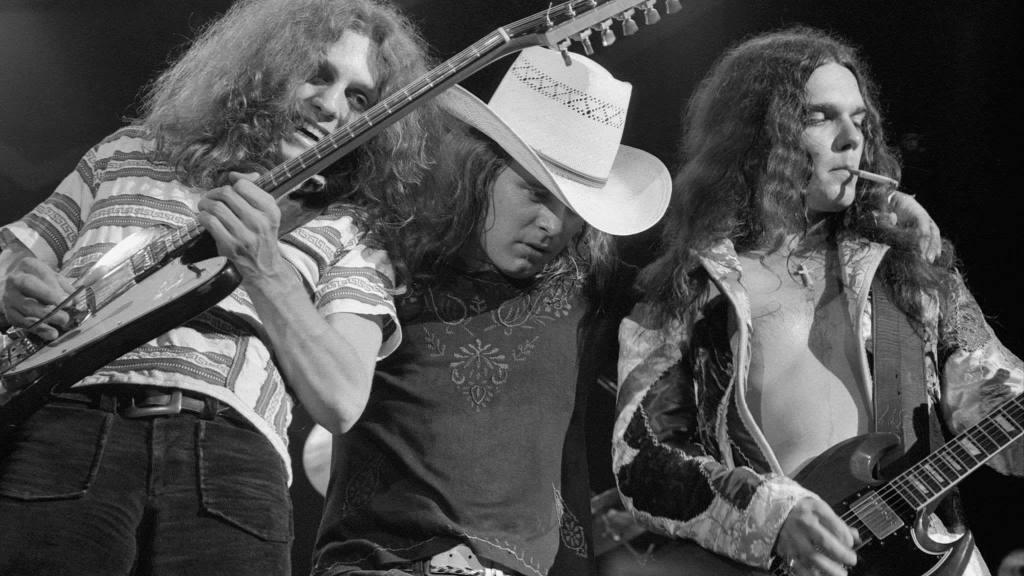
One evening after an hour of emptying his lungs out onto the mic, Zant needed to give his voice a rest and so advised the band to play on “a little longer”, allowing him to regain his vocal range. So, Allen Collins and his partner in crime Gary Rossington began to jam on into the night, transforming that little while longer into the most iconic guitar solo of all time. Who cares if it has too many chords to write lyrics for? Sometimes you just have to let the guitar do the speaking, because sometimes, we can’t always get across quite what we want to say.
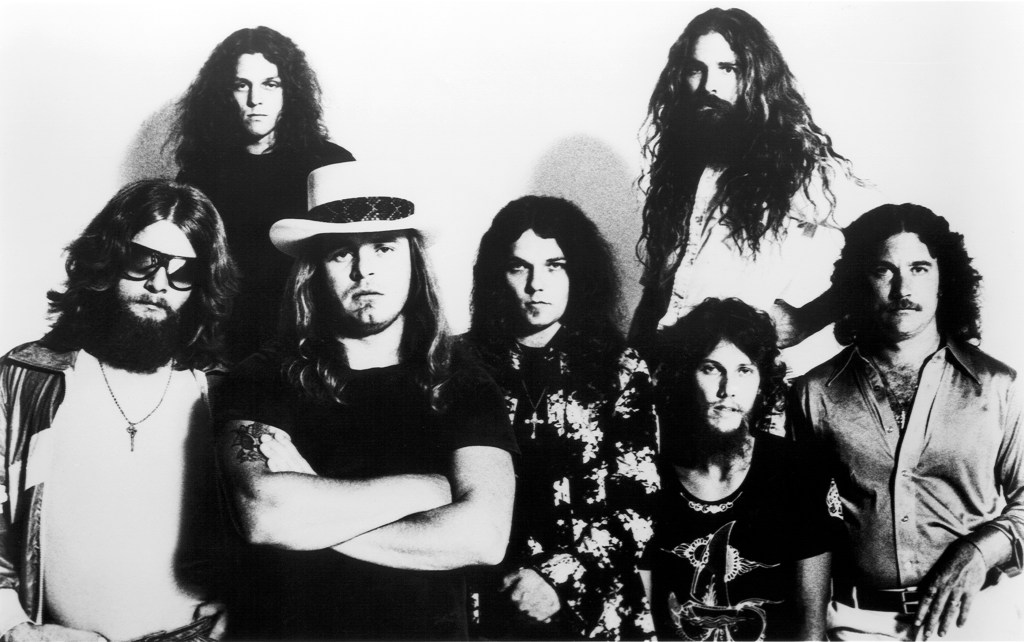
Instantly recognisable for its breakneck speed, Lynyrd Skynyrd utilise a technique called doubling, injecting their guitar solo with a hit of hyper-kinetic energy. In the studio recording Collins played the solo twice over, placing a slight delay between each segment. This resulted in two separate performances stacked on top of one another, intensifying the overall mojo of the performance and creating a more explosive impact to each note. Rather than simply playing the same take twice, Collins recorded each layer separately, playing every section from memory. In doing so the solo maintains that same recognisable spontaneity from the jamming session it was birthed from. At every twist and turn you can hear Collins desperately try to catch up to himself, quickening his pace, correcting his chords, and thus, blessing the track with a sense of raw undomesticated speed.
In an interview during the mid 70’s Van Zant discussed what the track’s meaning is, to which he said:
“It’s about what it means to be free, in that a bird can fly wherever he wants to go,”
The lyrics certainly echo this idea, and the guitar closely follows suit. Coming in at around the 4:55 mark, the guitar solo lasts a staggering 143 beats and such length suggests that it may never come to an end, instead flying on like a bird into the sunset. Across its colossal runtime Collins and Rossington follow an unpredictable path of highs and lows, imbuing each chord with a wild fury as they are quite literally set free on stage. Testing every fibre of their skill as guitarists they dance across the musical spectrum, demonstrating suspenseful build-ups like the one at 6:32, and cataclysmic breakdowns at 8:14. Effortlessly slipping in and out of new licks to great impact, the two display an untamed mastery of the instrument and perfectly symbolise what it means to be free. Lynyrd Skynyrd raised up a middle finger to the music industry and played a four-minute guitar solo just because they could – and isn’t that what freedom is, doing something just because you can?
Still riding the counterculture wave of the 1960s, popularised by movies like Dennis Hopper’s Easy Rider, Americans were more politically aware, more adverse to government control and more active in their beliefs. Free Bird, I think, wonderfully captures this cultural zeitgeist, and like I alluded to before, perfectly gets across just what we can’t find the words for, and the American people agreed. Within a hazy fog of manic chord changes and adrenaline pumping riffs something resonated with them; whether it was an unapologetic desire to act up or simply a need to escape the traumas of everyday life, we will never know. But what we do know, is that whatever it was, it was fucking awesome.
 The Jukebox