No other genre has populated the dancefloor of nightclubs across the world quite like Disco has. Epitomised by repetitive vocals and catchy, liberating instrumentals the genre continues to bless all who hear it with a celestial funk that beckons you to carry out the most god-awful Michael Jackson impression imaginable. It is a genre that seems to consistently fall on welcoming ears and get people in the mood for the night ahead (I mean it is pretty much impossible to hear Sister Sledges ‘He’s the Greatest Dancer’ and not convince yourself this is about to be the greatest night out of all time.) As if ritualised, I will without fail put on my Disco playlist at every pres and right on que the drink starts flowing, people’s eyes light up with optimism and the infectious two-step spreads throughout the room – the three essential signs of a good night in the making and a clear testament to the impressive longevity of the genre. With this in mind I’d like to look back on how Disco curated its inherent danceability and became the stalwart companion of the dance scene.
Originating in the underground New York nightclubs of the 1960s, Disco was born out of a happy marriage between the Soul and Funk genres. A small clique of DJ’s started to deploy two turntables and armed with an endless supply of funk and soul records, from the likes of James Brown, Curtis Mayfield and the O’Jays, they began to revolutionise the nightclub as we know it. Two DJs in particular helped lay the groundwork for the Disco genre we know today. David Mancuso and Francis Grasso developed many of the DJing techniques used in the clubs of today. Before Disco, nightclubs would announce the track that had just played, however, Grasso began to use a pair of headphones to listen to the incoming track, allowing him to seamlessly mix the two together and achieve a continuous mix of high-spirited funk. With this ability to now effortlessly transfer between tracks DJs began to concentrate on selecting music based on the crowd’s responses. The dance floor was about to evolve into a place of uncontrolled energy that was characterised by expressive freedom, liberation and irresistibly catchy synthesizers.
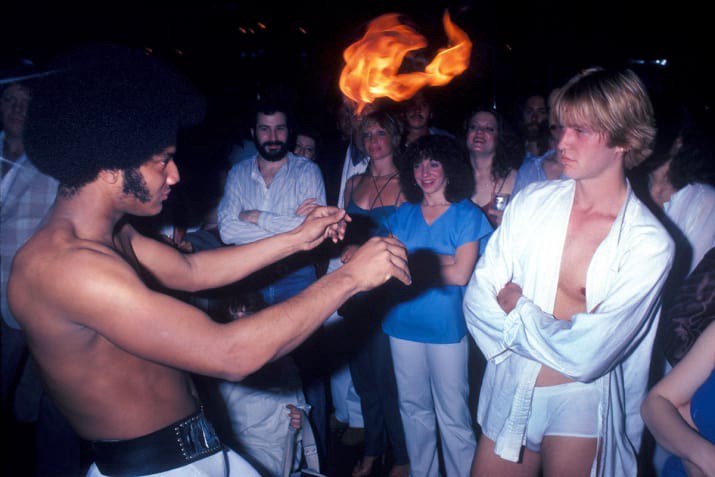
By the 70s Disco music began to emerge that complemented this fresh approach to DJing, and it was this music that repopularised dancing as a social activity. Previously you would often have to bring someone of the opposite sex to get into a nightclub, however, Disco broke this. Disco dancing was the first-time people could go onto the dance floor as an individual, which allowed for a new form of expressive freedom. It is highly common in Disco tracks that the lyrics take a backseat, allowing the instrumentals to do the talking. Repetitive and straightforward the lyrics were relatable enough to draw people to the dance floor, yet not overwhelm them with deeper meaning. Sister Sledge’s classic ‘We are Family’ is built around the repetitive chorus, “We are Family”, which is nothing special at all, but it sends a message of inclusion: everyone in that club is welcome to share this moment, and dance with whoever and however they please. Once this invitation has been extended to the crowd the music takes over, surrounding us in a thick haze of groovy guitar riffs, soulful violin and satisfyingly twangy bass. An essential aspect of the genre is the use of the Four-on-the-floor note pattern, which is used in Sister Sledge’s track to great effect. A rhythm pattern is kept in “4/4” time, meaning the bass drum uniformly hits every quarter note, creating this methodical ‘heartbeat’ rhythm which quite literally pumps the music around your bloodstream. Such a steady beat encourages people to populate the dance floor, almost pulling them there like moths to a lamp, and once there you just can’t help but let loose.
One community with who these dance-focused rhythms resonated with deeply was the homosexual one. During both the 60s and 70s the gay demographic experienced increased homophobia through controlling legislation that prohibited certain uses of their body, such as where they could go and who they could be seen with. Therefore, they found purpose within the energetic, quick-hitting beats of the Disco genre. It was a sound that promoted free-spirited movement, and the gay community where dying to listen. During 1970, in response to the growing message of gay liberation – which reached its climax with the Stonewall Riots in 1969 – the two entrepreneurs, Seymour and Shelley, who owned a series of gay bars in New York, bought ‘The Sanctuary’. Once a failing discotheque, they transformed it into a place that welcomed gay men, and in turn subverted any state control. Re-cast as a multicultural, polymorphous, free-flowing space it quickly became the Mecca of the Disco scene. All the worries of the everyday dissolved away into the pulsating desire of the crowd to ‘stay a while longer’, as this club epitomised everything the genre celebrated. A cocktail of frantic limbs amidst endless Disco loops, ethereal lighting and sequin lined attire, it appealed to more than just the gay community. African Americans and Latino Americans joined the fun as well and altered the dynamic of the nightclub with an energetic authenticity. It’s the people who in everyday life were marginalised and faced discrimination who underpinned the energy of Disco – at last they could move how they wanted to move and be who they wanted to be.
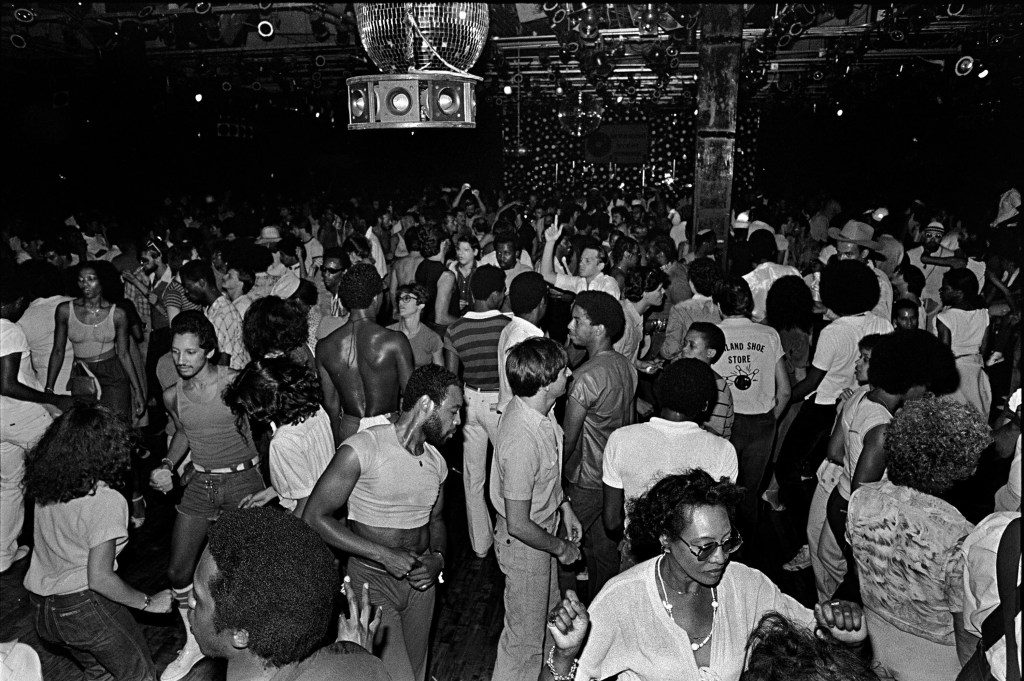
It was this inclusive attitude that made Disco the cultural powerhouse it is today. Dominating the 70s and 80s with anthems like Earth, Wind and Fire’s ‘Lets Groove’ and Chaka Khan’s ‘Fate’, Disco began to influence all walks of life in the industry, as demonstrated by Aretha Franklin’s ‘Get it Right’ and even Bowie’s ‘Let’s Dance’. It is a genre that is well and truly here to stay. Still popular today, for the same manic, rebellious spirit as in its early days, the contemporary audience flock to festivals far and wide to find the promise of the famous “Disco Tent”. Essentially a lawless land, existing in its own pleasure giving bubble far from any of life’s mundane stresses, some of my fondest memories have been made on those muddy fields, surrounded by inebriated two-steppers, horrendous bucket hats and a never-ending stream of Disco Fever. For a night nothing matters but the music, and that’s the beauty of it all.
It’s not quite the same, but here is a playlist to get you hooked.
 The Jukebox