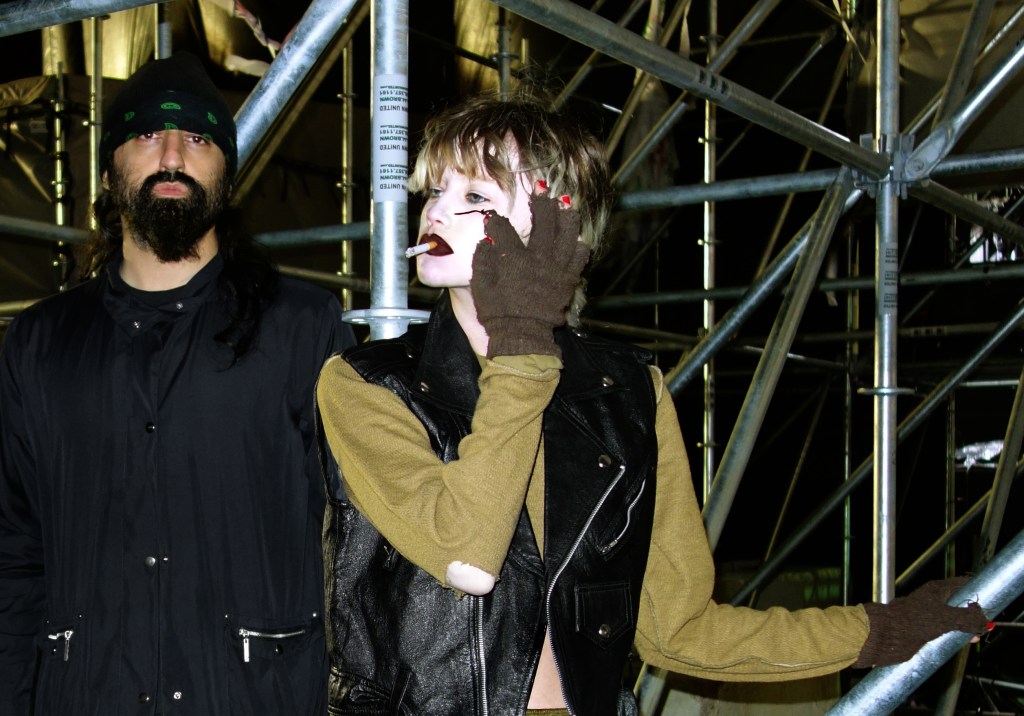
When I first started listening to the Canadian electronic-duo, Crystal Castles, I never thought I would end up adding songs with names like “Pretty Cvnt” or “Mr. Kill Myself” to a playlist titled “angry electro”, but I’ve ended up here and want to figure out what went wrong. Crystal Castles’ popular hit “Not in Love” was one of my first ventures into electronic music, its sparkling synth melodies and booming bass instantly got me hooked as a child, as the track offered an uncanny sense of comfort. It was only recently that I decided to delve a little deeper into their discography and their genre as a whole. Why not? If I enjoyed their chart toppers so much surely I would find something I liked. Yet with every dive down that initial sense of comfort slowly faded. I found myself frantically coming back up for air, desperately trying to bleach my ears from the obscenities I had just heard. However, for some reason I found myself going back into the belly of the beast. Like a deranged crackhead I needed something more intense and more addictive with every return. Maybe I just hate having ear drums, but I just couldn’t get enough of the sharp, streamlined basslines and piercing vocals that I kept finding. Crystal Castles gave me the curiosity to overturn the metaphorical rock, in turn revealing a gruesome underbelly of musical horrors my mind couldn’t fathom. This is Electro-Punk and I fucking love it.
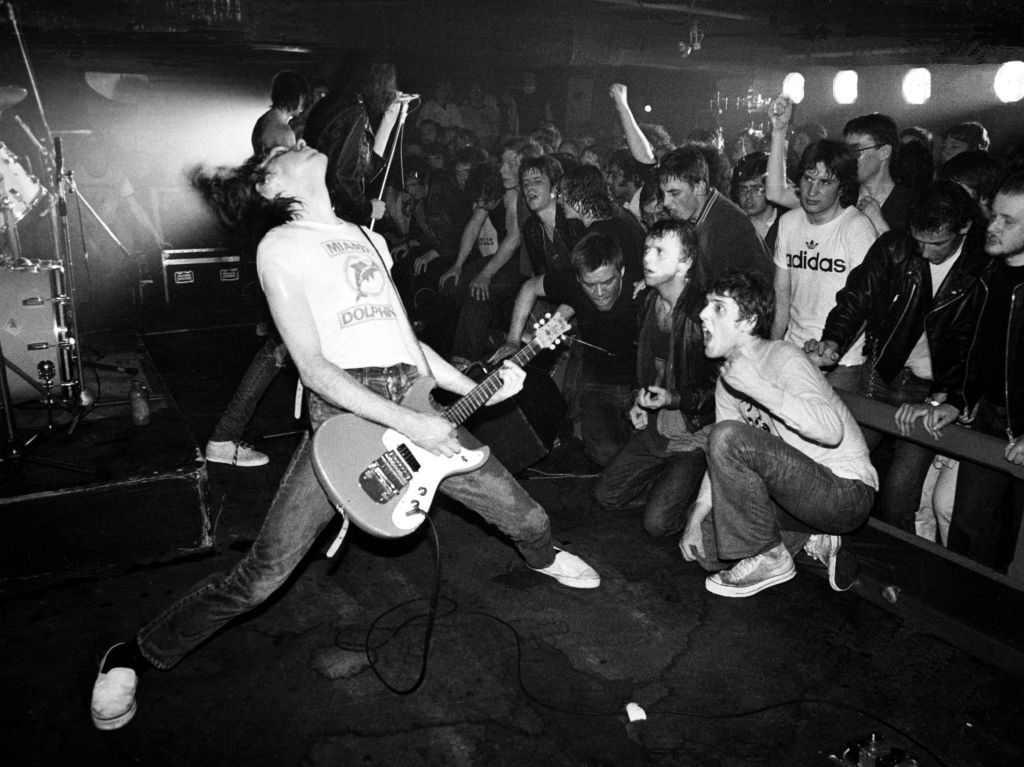
Serving as an umbrella term to other sub-genres, Electro-Punk describes the combination of electronic music with the distinctive attitude of Punk music. Originating in the mid to late 60s with the appearance of The Stooges, Punk music evolved into a pivotal moment in music history, helping to break down barriers and proudly stand up for what it believed in. However, it wasn’t until the genre dug its roots into the British scene that it really began to take off. To make a long story short, during the 70s the British people were angry. With unemployment rates at an all time high, anti-establishment views began to spread throughout the nation, and Punk music quickly tapped into this zeitgeist with its signature style. Characterized by fast tempos, booming, distorted riffs and shouty, discontented vocals, the likes of The Sex Pistols and The Clash curated a thrashy and confrontational form of musical terrorism that said exactly what the country was thinking. This distinctive sound of non-conformity created over five decades ago serves as the lifeblood for the punks of today.
Upon a first listening of Crim3s’s ‘Lost’ or Crystal Castle’s ‘Fleece’ the parallels quickly rise to the surface. Sadie Pinn’s stretched out, electrified vocal performance across ‘Lost’ reverberates through your entire skull in the same way Johnny Rotten’s crashed around arenas up and down Britain. Almost entirely incoherent, her voice seamlessly blends with Rou Rot’s sonic hellscape in a rebellious instrumental frantically trying to escape its cage. This, I think, is the new weapon of the modern-day punk. Whilst those in the 70s waged lyrical warfare, today we see an abrasive experimentalism standing in its place, all thanks to the growing use of the modern-day synthesiser.
The guitar served as a stalwart companion to any 70s Punk band, laying down hyper-energetic basslines and more importantly displacing the synthesiser itself. Rarely seen in Punk circles, it was seen as a big-ticket item used only by the millionaire rock stars. You know the people punks despised. However, you’ll do well to find any Electro-Punk tracks that don’t utilise the synthesiser. An amazingly expressive instrument, the options are almost endless, allowing artists to create sounds both intimate and strikingly original, therefore making it the perfect choice for the genres frenzied nature. Whilst lyrics still play an important role, it is mainly the cataclysmic sounds of Electro-Punk that drive forward its message of non-conformity. If we loop back to Crystal Castle’s ‘Fleece’, such a sentiment is evident. Ethereal electronics flutter away in the background, before a spine rattling bassline smashes into the foreground, producing a sound akin to letting an angle grinder loose on your skull. We can even look back to The Prodigy’s ‘Smack My Bitch Up’ and find an earlier adaptation of this synthesised chaos. Accompanied by Keith Flint’s vulgarities, Liam Howlett proceeds to descend into a murky abyss at the one minute forty-five second mark. Mixing crushing bass drops with piercingly high-pitched electronics, the result is a sensory overload similar to being hit by a flashbang. The punks of the 70s didn’t care what they said; the punks of today don’t care how they sound.

Moody, unorthodox and undoubtedly raw, I strongly urge you to take the plunge into Electro-Punk. Here’s another playlist to get you started:
 The Jukebox