After the huge success of the Duffer Brother’s most recent season of Stranger Things it seems like the perfect time to discuss one of my favourite aspects of the show – the goddam music. Much of the show’s success has come from its innovative storytelling, incorporating everything from small town murder mysteries to grandiose Cold War plots and interdimensional horror stories. For me however, what brings this delicious cocktail of themes all together is the scintillating soundtrack. Amongst all the chaos, the unique ‘sound’ of Stranger Things manages to stand out within both a sonic and narrative sense. Music can play a crucial role in film and TV, often being used to heighten moments of tension, display character development and, in the case of Stranger Things, build the world. Using both an original soundtrack and carefully curated tracks from the 80’s, the Duffer Brothers mould two antithetical spaces through sound; the comforting nostalgia of small-town Hawkins and the eerie, ever present horror of the ‘Upside Down’.
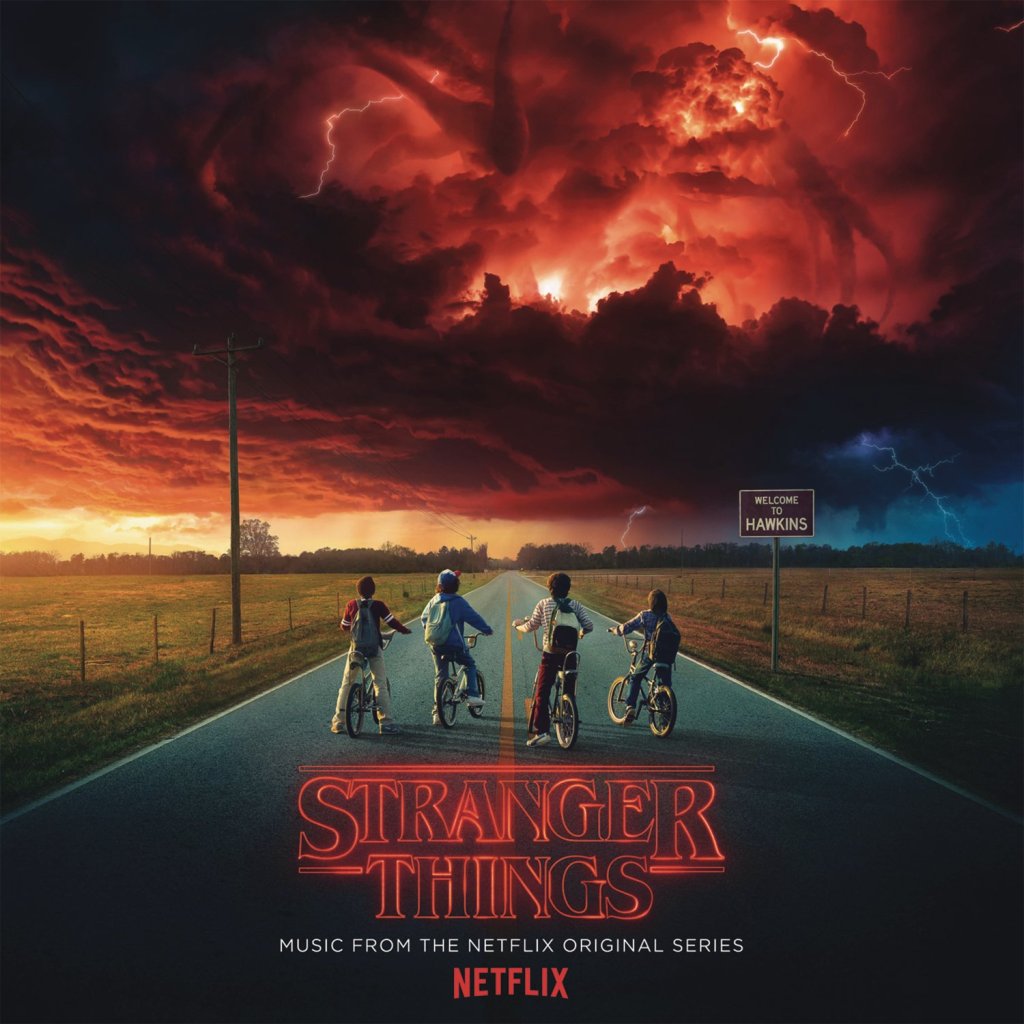
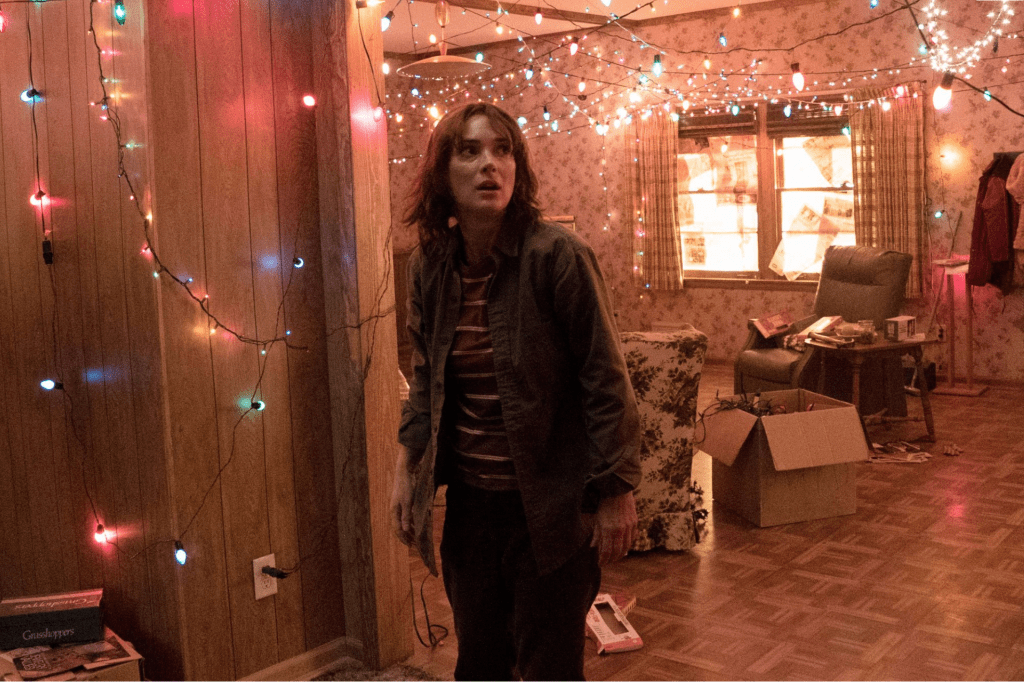
For many, myself included, Stranger Things has become a comfort show. It possesses a certain aesthetic that others can’t grasp. The spectral neon-lighting which accompanies so many of the character’s bedrooms, and especially Mike’s basement, constructs this warming, cosy tone to certain spaces throughout the fictional town of Hawkins. Whilst sprawled out upon the sofa in total comfort, you can’t help but become immersed in the show’s sense of reassurance, almost becoming nostalgic for a place you’ve never even been, and the original soundtrack enhances this feeling. Created by Kyle Dixon and Michael Stein, the synth-laden soundtrack is the perfect companion to the scenes where Mike and the other kids find themselves sharing a moment of solace in the safety of their own rooms. Amongst a catalogue of ethereal electronics, tracks like ‘Kids’ and ‘Friendship’ are two of my personal favourites which perfectly mirror the consoling nostalgia of the early seasons. Mimicking the gentle twinkle of the neon lights, the soft, fluttery synth scores work away in the background, not intruding too much upon our ears, but not fading out of existence. Instead the sound soothes our ear canals with the most delicate of notes which seem to invite us into a warming embrace. These beautifully melodic tracks persist in the backdrop of so many scenes throughout Hawkins, seemingly telling the viewer, everything’s ok, the monster under the bed has gone (for now). It’s moments like these where the work of Dixon and Stein comes into its own. Without uttering a word, the soundtrack instantly informs the viewer which spaces in this world are safe and which aren’t. In creating a sound that embodies a specific feeling, the show uses music to build the rules of its world, we as viewers promptly understand these dimly lit bedrooms are not spaces we need to be wary of.
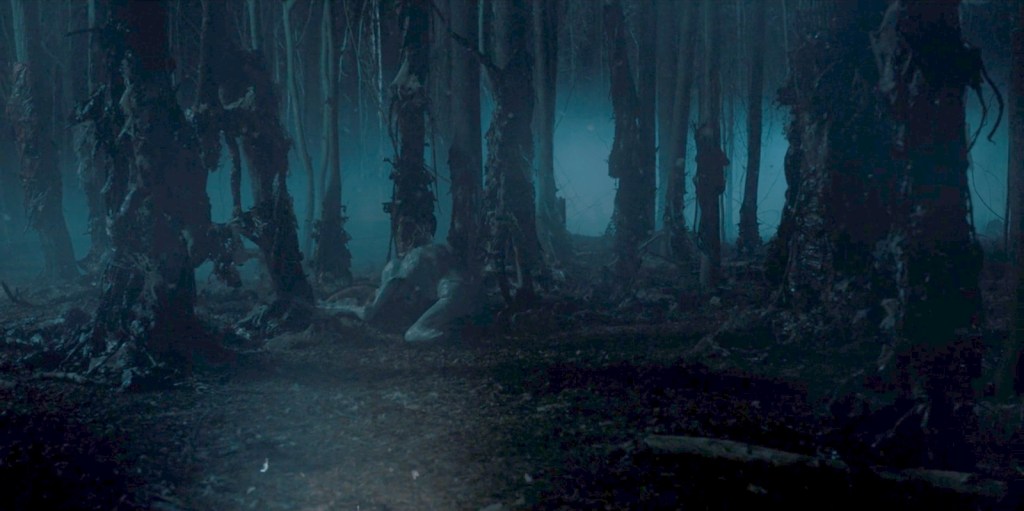
The flip side of using sound to convey meaning is that whilst we do still have beautifully intimate tracks, we also must have the polar opposite; dark, ominous and downright scary, it’s quite literally the upside down. Way back in season one we get introduced to the ‘Upside Down’; a type of parallel universe consisting of barren, twisted landscapes, apocalyptic cityscapes and unknown horrors even the most psychotic of minds couldn’t fathom. Many of the show’s moments of tension happen within this space, and so the theme must reflect the unique feel of the landscape and inform the viewer that this place is far from the safety of suburban Hawkins. Something lurks within the shadows, and the score conveys that. Still using their trusty synths, Dixon and Stein demonstrate how a change in pitch and tempo can entirely alter the tone of a piece. Time after time when characters from the main cast entire the Upside Down they know just as little about this space as us and the theme works to match that initial curiosity. The first two minutes utilise highly filtered synths which gradually increase in pitch as if to mimic the on-screen characters’ inquisitive demeanour. In utilising sound in such a way, the viewer can understand that this setting is not only new for them but for the characters as well. However, around the 2:33 mark we are met with a drastic change of tone. That sense of playful curiosity has faded away as we are met with the abrasive thump of a menacing bassy synth. The sharp timbre of these notes works to unnerve the viewer, unlike the twinkling progressions used throughout Hawkins, such a sound scratches away at our ears, building an immense sense of suspense. To achieve these inherently daunting notes an analogue synthesiser was used which allows musicians to fine tune their sound into places between notes, therefore finding a noise which cannot be played by hand, lending the score this unnatural, otherworldly aesthetic that encapsulates the twisted dimension we have found ourselves within.
Whilst tracks like ‘Kids’ use a slightly higher tempo to create an upbeat mood within scenes, the ‘Upside Down’ theme lowers the tempo to 95 BPM, at which point the notes seem to hit at a walking pace, thus signifying whatever is in this new space is beginning its pursuit. As the track continues and the characters delve deeper into the darkness the tempo of these bassy notes increases, whatever lies within the shadows has lost its patience, it’s moving in. By this point a repetitive ticking-like noise joins the fray, along with various soaring synth waves which take the level of tension to new heights. Then bang. All these moving parts cut out, and we’re left with an overwhelmingly distorted sound resembling TV static, as if to say “It’s too late. The hunts over”. At no point within this track can we as the viewer relax, every instrument and note choice has been carefully selected to completely unnerve us and offer no sense of security. Suddenly you’re not just checking for monsters on the screen, but you’re checking for them in your own room. The track epitomises an intense sense of terror that not only constructs an unsafe space on screen but extends it unto our own personal space. It’s a score that both asks questions with an initial sense of curiosity and swiftly replies with a foreboding answer. For me it’s one of the best scores we have heard on TV, whether you’re watching the show for the 1st or 10th time it brilliantly conveys everything you need to know about this space; it’s unknown, it’s dangerous and something is out to getcha…
Used in alliance with the original soundtrack is a carefully curated mixtape featuring all the best tracks the 80s has to offer. These songs not only tap into this weird feeling of faux nostalgia for an era I never grew up in, but most importantly they complete the world we have become invested in. With the original soundtrack’s atmospheric synths conveying the rules, period songs like Toto’s ‘Africa’ and Bon Jovi’s ‘Runaway’ help to construct the show’s place in time and flesh out the wider setting. Music is a brilliant way of dragging us back in time, and when paired with the bright LED lights, slightly questionable fashion sense and simply spectacular mullets of Stranger Things there is no doubting what decade the show is set in. During episode one of season two this 80s aesthetic reaches an almost hilarious climax in a scene where the Duffer Brother’s appeared to say, “fuck it, how many facets of the 80s can we incorporate into one 45 second sequence”. Utilising the Scorpions rock anthem ‘Rock you like a hurricane’, Billy arrives at Hawkins Middle in an 80s blaze of glory. With a scintillating electric guitar solo brewing in the background he unnecessarily revs his behemoth of a car across the car park, before a shot slowly pans to the driver’s side where we see a pair of flared denim jeans and leather boots authoritatively stomp out of the car. As the camera pans up, we’re almost blinded by the double denim and gorgeous mullet, before Billy takes a drag of his ciggie and turns towards the camera as Klaus Meine’s thrashing lyrics proclaim: “Here I am!”.
Fuck yea. The 80s.
Now I realise I’ve probably waffled on for a bit too long here, but I really really really admire how Stranger Things utilises music to immerse the viewer in their universe. Its ingenious mix of spectral synths brings out the emotions associated with certain spaces, whilst the infectious 80s compilation perfectly encapsulates the feel of the era and serves as a brilliant backdrop to a gripping narrative.
 The Jukebox