One of my favourite quotes comes from actor, Ethan Hawke, being asked “Do you think human creativity matters?”. His response reads:
“Most people don’t spend a lot of time thinking about poetry. Right? They have a life to live, and they’re not really that concerned with Allen Ginsberg’s poems or anybody’s poems until their father dies, they go to a funeral, you lose a child, somebody breaks your heart, they don’t love you anymore, and all of a sudden, you’re desperate for making sense out of this life, and, ‘Has anybody ever felt this bad before? How did they come out of this cloud?’ … ‘What is happening to me?’ … And that’s when art’s not a luxury, it’s actually sustenance. We need it.”
This singular quote changed my entire perspective on how I see the world, and in this case, music. It’s such a sentiment that I think underlines Lana Del Rey’s ethos as a musician. I remember when I first listened to her discography, I thought to myself ‘Why would anyone ever want to listen to anything this dreary?’. In light of Hawke’s insight, I have begun to read Lana’s sound in an entirely new way. Her music is to be applied to your own situation, make sense of whatever struggle you have, and guide your hand through the fire and out the other side unscathed. In Hawke’s words “it’s actually sustenance”.
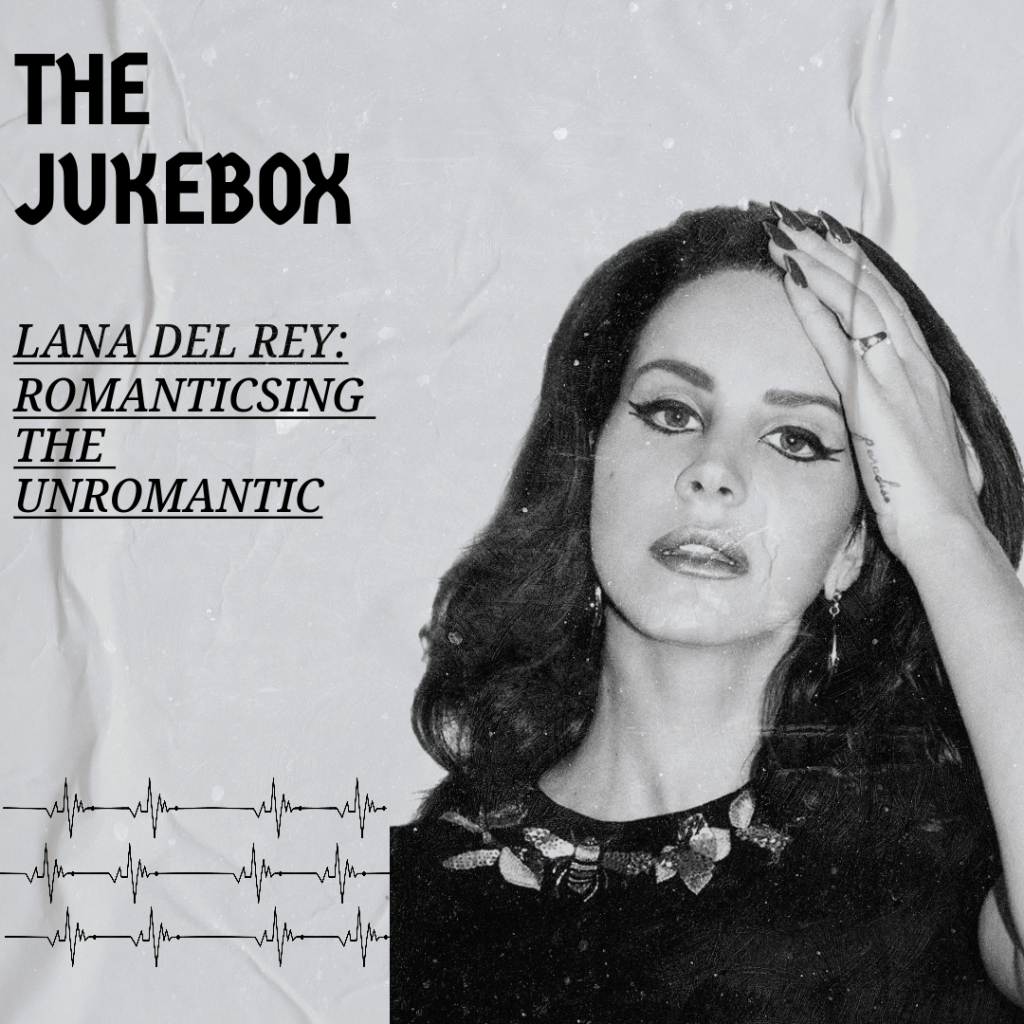
The creation of singer songwriter, Lizzy Grant, known professionally as Lana Del Rey, so often harnesses her emotional trauma in her music, boldly tackling extremely difficult topics such as substance abuse, toxic relationships, physical abuse and submissive naivety. A heady cocktail of sadness that many understandably choose to avoid, Del Rey continues to bravely speak her harrowing truths, wear her heart on her sleeve and explore the realities that so many experience and too few have the courage to broadcast to the masses. Being a unique figure in the music industry, Del Rey is utterly, desperately alone; exempt from any particular musical scene, void of any impersonators and resistant to imitation. This loneliness underpins so much of her sound, yet is oftentimes shockingly romanticised. From the moment her name leaves your mouth, Lana Del Rey has curated her own luxurious aesthetic that musters up visions of lavish ballrooms, opulent colour, and affluent old-money appeal. From her appearance on the ‘Great Gatsby’ soundtrack, to her muse being portrayed on the front cover of Vogue, her image screams success; yet her voice mutters in quiet desperation.
Through her tragically beautiful chords, time and time again Del Rey’s fluttering, ornate instrumentations have perked the ears of millions, whilst her melancholy vocals have touched the hearts of those adrift. This dichotomy of sound is at its most recognisable on Del Rey’s third studio album Ultraviolence. At her most vulnerable, Del Rey taps into her loneliness and proceeds to suck it dry. The overarching feeling is a sense of seediness, desperation, and a hyper-romanticised focus on brutal isolation and loss. All these themes are blown up to gigantic proportions as Lana rides the blue crest of sadness across the album’s entire runtime. Wholly blending the romantic with the unromantic is the album’s title track ‘Ultraviolence’. An orchestra of hopeful strings thrusts us into a regal amphitheatre of blind romance, whilst the supporting piano chords and buoyant bass guitar add the final flourishes to an instrumentation fit for an angel. The reality, however, is that this instrumentation merely clothes the devil in a new dress, serving as a façade to a song in which love and physical abuse are intertwined. Scattered throughout the track is Lana’s trademark iconography in which love takes on an ugly face, through terrifying utterances like “He hit me and it felt like a kiss” and “Give me all of that ultraviolence”. The harsh reality of abuse is right there front and centre. Yet, blinded by the beautiful soundscape Del Rey creates, the lines of love and violence somehow blur for us just as much as they did for her, causing the “sirens” to sound like “violins”.
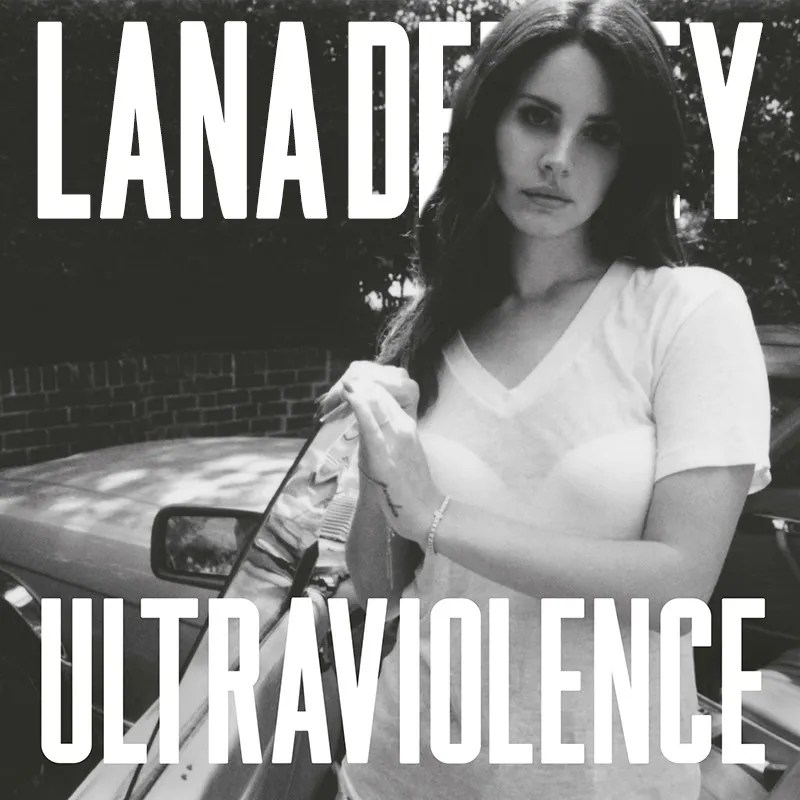
Her songs are slow and atmospheric, filled with theatrical melancholy, encompassing familiar themes of women in trouble due to their yearning for abusive men who remain, somehow, toxically irresistible. Off the same album, the track ‘Sad Girl’ further enforces this sonic philosophy as Del Rey acknowledges her own willing subservience at being the “mistress on the side” despite longing for something more. As the song progresses, her initial stubbornness wears away as she reveals to the listener that no matter how much she tries to see this relationship in a positive light, this setup will forever make her a “sad girl”. Such a declaration creates the structure for the chorus, as Lana repetitively hurls this self-flagellation into the ether, emphasising her anguish and engulfing the song in her craving for something real. All the while, Del Rey maintains one cutting line throughout; “But you haven’t seen my man”. Somehow within this mixing pot of sorrow, for me that line holds the most purpose. It negates all of Del Rey’s self-recognition, as even when presented with all the facts, she will still justify being the “mistress” and remain under her man’s irresistible spell casted through his physical allure.
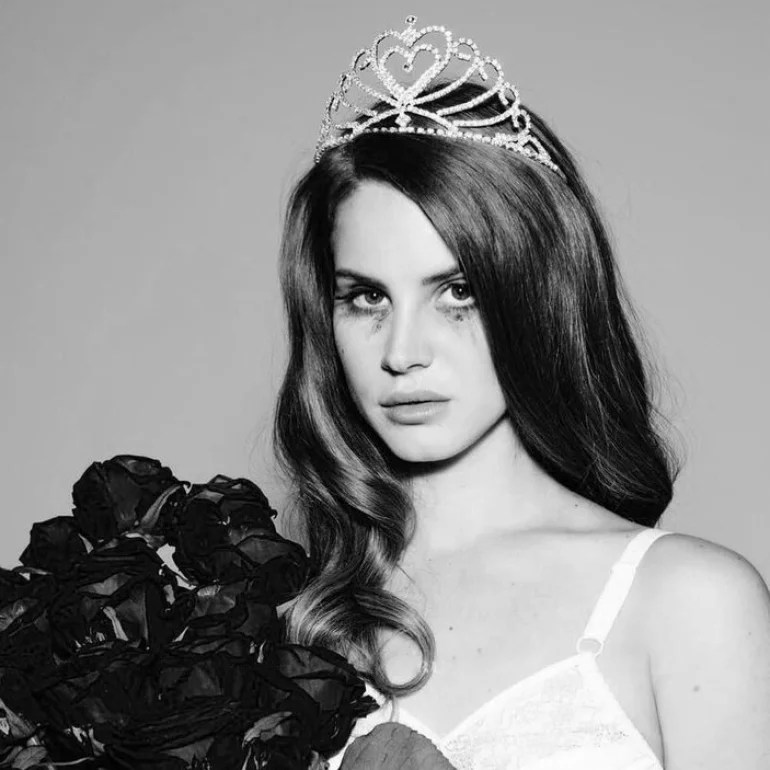
Off her critically acclaimed album Norman Fucking Rockwell, ‘Cinnamon Girl’ is another deep dive into Del Rey’s experiences with love, as she painstakingly yearns for an end to her damaging history with men, to such an extent that she fabricates a potential future with a present that was never even there. Once again, Del Rey plunges us into a theatre of idealistic romance with a seductive instrumentation, packed to the brim with melodic piano chords, an ensemble of violins, and Del Rey’s quintessential angelic tone as her voice becomes a beacon of hope. Every piece of the music works in perfect harmony to summon up a reality of unconditional love, a reality which Del Rey envisages. The truth is less melodic, it’s abrasive, it’s dark; it’s unrequited love. From the offset, we are presented with an unbalanced relationship as the subject of Del Rey’s desires continually takes pills to push her away and keep her “at arm’s length”. Whether these pills are used to escape his problems, forget about Lana’s existence or simply scare her away, we don’t know, but she continually finds her “way back in” despite all the warning signs. As we enter the chorus, Del Rey reveals what she has been searching for all along and why she continually embarks on the long journey back to her supposed safe haven:
But if you hold me without hurting me,
You’ll be the first whoever did
These two lines encompass everything she has ever wanted – a passion for closeness, security and comfort – three things which run in contrast with her distant and cold reality at arm’s length. Prior to this declaration the line “There’s things I wanna talk about, but better not to give”, demonstrates her acceptance that she is unable to ask for this closeness. Out of a fear of encroaching on her partner’s freedom and an even larger anxiety of becoming a nuisance to his way of life, Del Rey bites her tongue and deprives herself of what she truly wants. Fearful of isolation and powerless to change anything, Del Rey remains within a stagnant relationship that will forever leave a bitter taste in her mouth – bringing a new meaning to Cinnamon Girl.
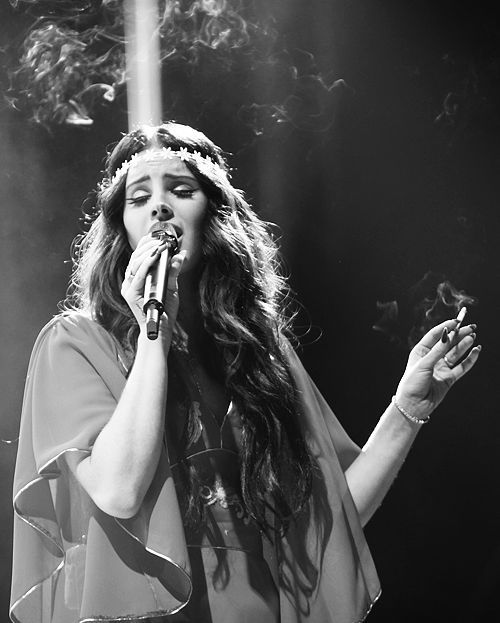
Del Rey frequently addresses the emotional suffering and manipulation at the core of so many of her experiences, and never holds back with her honesty. It’s heart-breaking. So why does it always sound so good? To hark back to Ethan Hawke’s quote, it’s sustenance. Music is a portal through which people can engage with and apply to their own situation, not just to validate their own feelings, but to begin to seek a way out of the darkness. Del Rey’s music certainly makes those who have shared similar experiences feel seen, and that undoubtedly helps to overcome those feelings of isolation, but the reason, I believe, Del Rey makes music is to spur on a positive change. Her glamorisation of depression and submissiveness (to name a few) forces people to engage with her songs, sing her choruses and no matter how subconsciously, consider their own experiences with the ubiquitous nature of relationships, both with ourselves and to others. The desperation for mutual connection runs consistently through her tracks and almost disturbs with its frequency and brutality. If listening to ‘Ultraviolence’, ‘Sad Girl’, or any other bleak Lana track, feels like looking into a mirror, then it forces us to look inward. She creates music to entice us into her web, where we are forced to question our own situation before her angelic falsettos cut viscerally into our very soul, warning us to stay any longer.
With Lana’s tendency to dive headfirst into deeply disturbing and uncomfortable topics, you absolutely have to be willing to go with her and be open to uncovering the reality of her situation and perhaps in turn your very own. To have such misery reflected back at oneself should result in one thing – change.
 The Jukebox
Extremely revealing, somewhat disturbing dive into the psyche of this talented artist – found it a really interesting read Sam, very well written and genuinely insightful!
LikeLike
wow!! 92Lana Del Rey: Romanticising the Unromantic
LikeLiked by 1 person
good read
LikeLiked by 1 person