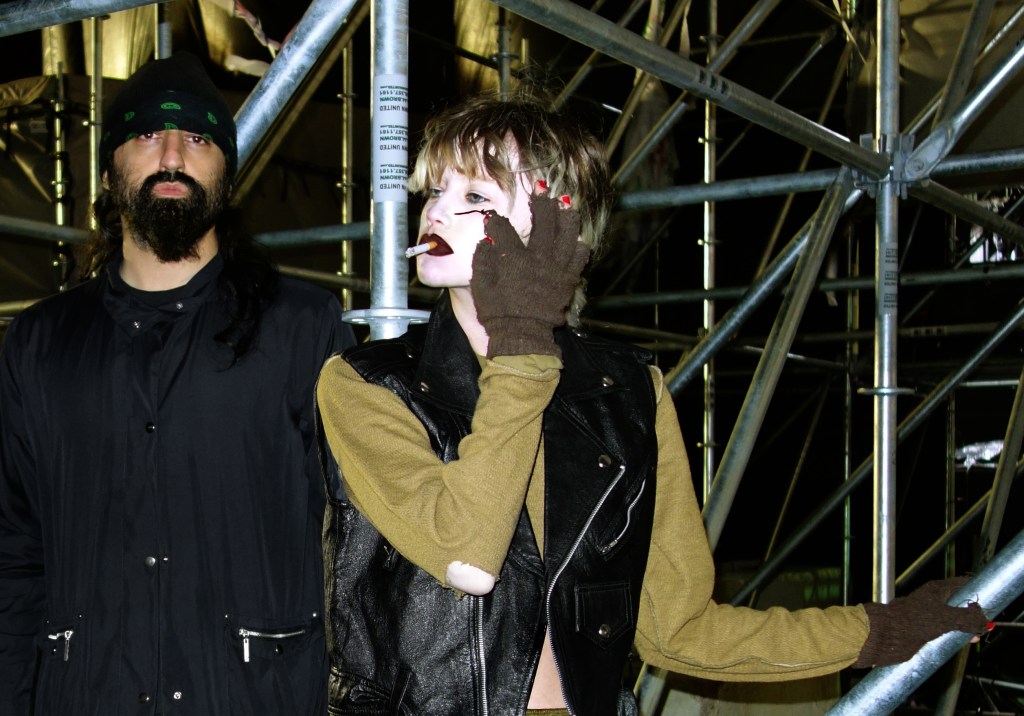
When I first started listening to the Canadian electronic-duo, Crystal Castles, I never thought I would end up adding songs with names like “Pretty Cvnt” or “Mr. Kill Myself” to a playlist titled “angry electro”, but I’ve ended up here and want to figure out what went wrong. Crystal Castles’ popular hit “Not in Love” was one of my first ventures into electronic music, its sparkling synth melodies and booming bass instantly got me hooked as a child, as the track offered an uncanny sense of comfort. It was only recently that I decided to delve a little deeper into their discography and their genre as a whole. Why not? If I enjoyed their chart toppers so much surely I would find something I liked. Yet with every dive down that initial sense of comfort slowly faded. I found myself frantically coming back up for air, desperately trying to bleach my ears from the obscenities I had just heard. However, for some reason I found myself going back into the belly of the beast. Like a deranged crackhead I needed something more intense and more addictive with every return. Maybe I just hate having ear drums, but I just couldn’t get enough of the sharp, streamlined basslines and piercing vocals that I kept finding. Crystal Castles gave me the curiosity to overturn the metaphorical rock, in turn revealing a gruesome underbelly of musical horrors my mind couldn’t fathom. This is Electro-Punk and I fucking love it.
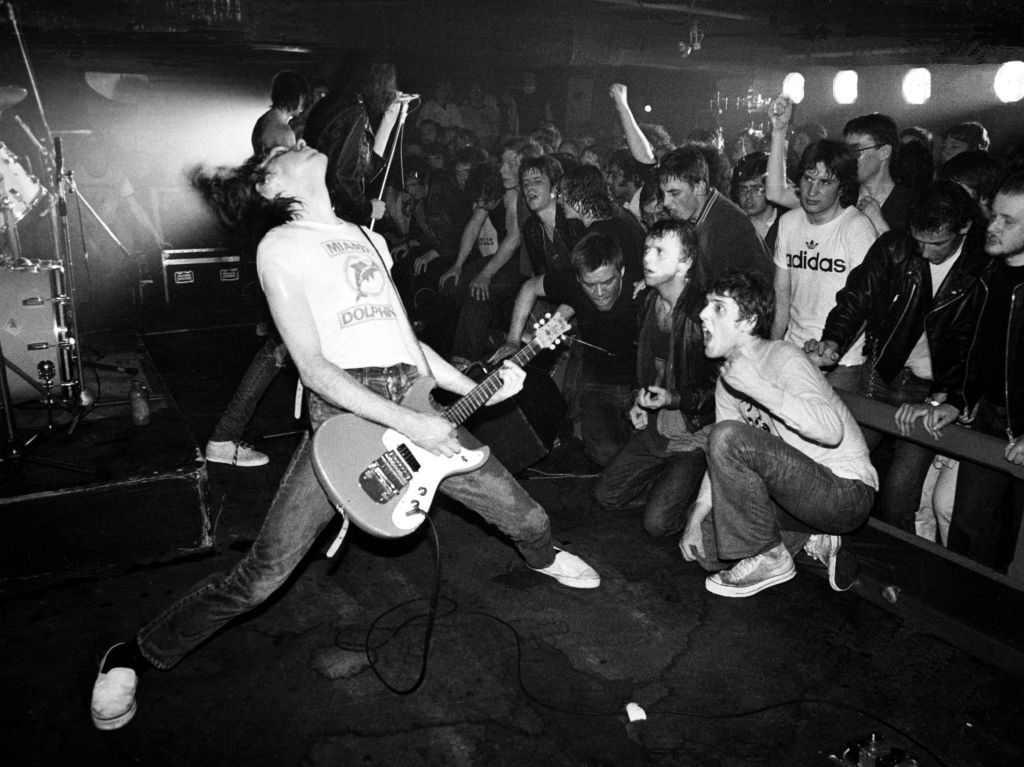
Serving as an umbrella term to other sub-genres, Electro-Punk describes the combination of electronic music with the distinctive attitude of Punk music. Originating in the mid to late 60s with the appearance of The Stooges, Punk music evolved into a pivotal moment in music history, helping to break down barriers and proudly stand up for what it believed in. However, it wasn’t until the genre dug its roots into the British scene that it really began to take off. To make a long story short, during the 70s the British people were angry. With unemployment rates at an all time high, anti-establishment views began to spread throughout the nation, and Punk music quickly tapped into this zeitgeist with its signature style. Characterized by fast tempos, booming, distorted riffs and shouty, discontented vocals, the likes of The Sex Pistols and The Clash curated a thrashy and confrontational form of musical terrorism that said exactly what the country was thinking. This distinctive sound of non-conformity created over five decades ago serves as the lifeblood for the punks of today.
Upon a first listening of Crim3s’s ‘Lost’ or Crystal Castle’s ‘Fleece’ the parallels quickly rise to the surface. Sadie Pinn’s stretched out, electrified vocal performance across ‘Lost’ reverberates through your entire skull in the same way Johnny Rotten’s crashed around arenas up and down Britain. Almost entirely incoherent, her voice seamlessly blends with Rou Rot’s sonic hellscape in a rebellious instrumental frantically trying to escape its cage. This, I think, is the new weapon of the modern-day punk. Whilst those in the 70s waged lyrical warfare, today we see an abrasive experimentalism standing in its place, all thanks to the growing use of the modern-day synthesiser.
The guitar served as a stalwart companion to any 70s Punk band, laying down hyper-energetic basslines and more importantly displacing the synthesiser itself. Rarely seen in Punk circles, it was seen as a big-ticket item used only by the millionaire rock stars. You know the people punks despised. However, you’ll do well to find any Electro-Punk tracks that don’t utilise the synthesiser. An amazingly expressive instrument, the options are almost endless, allowing artists to create sounds both intimate and strikingly original, therefore making it the perfect choice for the genres frenzied nature. Whilst lyrics still play an important role, it is mainly the cataclysmic sounds of Electro-Punk that drive forward its message of non-conformity. If we loop back to Crystal Castle’s ‘Fleece’, such a sentiment is evident. Ethereal electronics flutter away in the background, before a spine rattling bassline smashes into the foreground, producing a sound akin to letting an angle grinder loose on your skull. We can even look back to The Prodigy’s ‘Smack My Bitch Up’ and find an earlier adaptation of this synthesised chaos. Accompanied by Keith Flint’s vulgarities, Liam Howlett proceeds to descend into a murky abyss at the one minute forty-five second mark. Mixing crushing bass drops with piercingly high-pitched electronics, the result is a sensory overload similar to being hit by a flashbang. The punks of the 70s didn’t care what they said; the punks of today don’t care how they sound.
Moody, unorthodox and undoubtedly raw, I strongly urge you to take the plunge into Electro-Punk. Here’s another playlist to get you started:
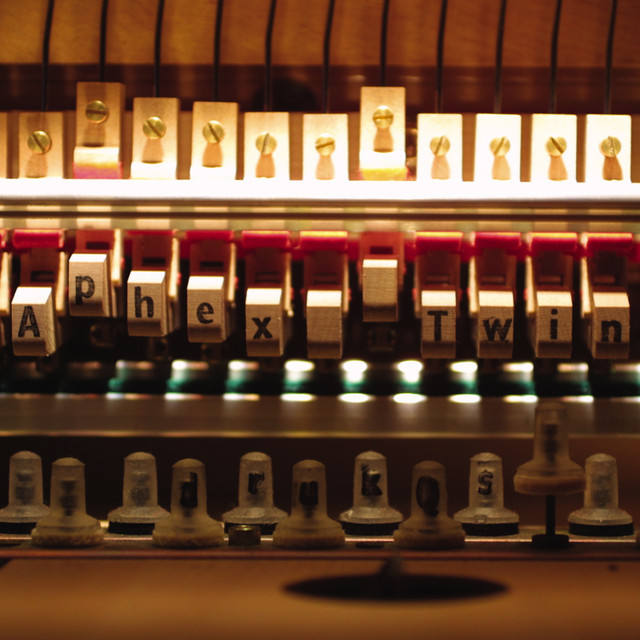
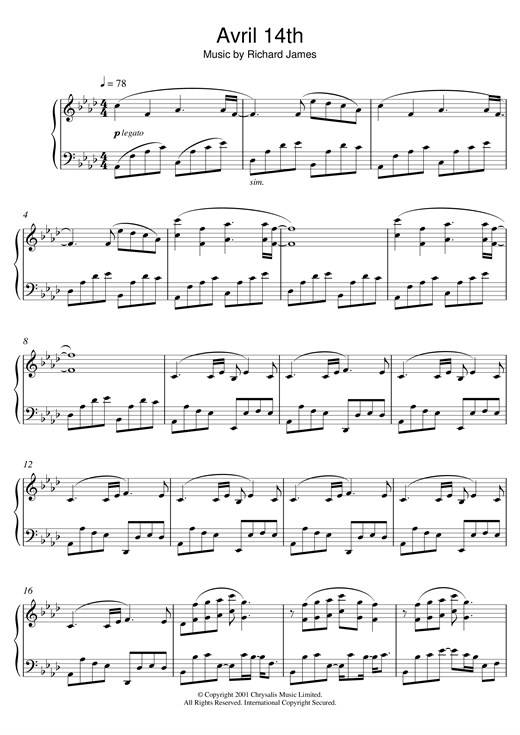
Over the past few days I have begun to delve into Aphex Twin’s (Richard David James) seemingly bottomless pit of electronic music. Perched on my window, flicking through his catalogue of infectious jungle and acid house beats, I encountered the hauntingly beautiful ballad, ‘Avril 14th‘. Instantly I was hooked. To be met with such elegant minimalism, from an artist renowned for his complex abrasiveness, you can’t help but be taken a back, shut up, and just listen.
Aphex strips music down to its bare bones across the track’s runtime, encouraging us to find joy in the melancholic rhythm and gorgeous sound. For me it was this unique sound that hit me first, almost angelic in nature, I was fixated on the crystal-clear highs and uncanny lows. To achieve such a sound Aphex took inspiration from a technique called prepared piano. Popularised by music composer John Cage in the 20th century, prepared piano involves placing objects in between the strings to subtly alter the instruments timbre and character. The result is a sound which is far colder than a regular piano, a sound that is ultimately characterised by the track’s foreboding eeriness.
It is an undoubtedly beautiful track, however, there is a sense amongst Aphex fans that something is not quite right. From the faint mechanical sounds heard on ‘Avril 14th‘, members of his devoted fan base surmised that it was made on a prepared Disklavier. Created by Yamaha, the Disklavier was an acoustic piano with external MIDI capabilities, which allowed it to reproduce a composition without a human player. The result is something that sounds human, but not quite; part human, part machine, our ears are met with delicate digital expressions of the heart.
For years Richard has been treading the line between the technological and the human, and upon ‘Avril 14th‘ he finds the perfect balance. He proves he is equally capable of spine shaking intensity as he is tugging on your heart strings with a melodic lullaby. Conveying so much emotion through every meticulously placed note it is no wonder the track has become the iconic piece of romantic electronica that it is today. A minimalist piece of timeless music, ‘Avril 14th‘ has, and will continue to, soundtrack so many lonesome nights.
Upon a first play-through of GTA 5, I was flicking through the countless radio stations, searching for the perfect tune to play as a I careened around the streets of Los Santos at breakneck speeds. My teenage self was undoubtedly hoping for some form of gangster rap to soundtrack the questionable activities I had in mind, and I cannot stress how pleased I was to not find any. Instead I stumbled across the quick hitting guitar loop of Stardust’s French House classic, ‘Music Sounds Better With You’. Oozing an infectious, intergalactic funk it was the perfect track to compliment the spectral, neon-lit streets of downtown Los Santos, and it hasn’t left my playlist since.
There is so much I want to discuss about the feel-good sound of this song; however, I will start with some backstory on its conception. It was the sole track to be released by French House-music collaboration, Stardust, consisting of Thomas Bangalter (of Daft Punk), Benjamin Cohen, and Alain Quême. Just as I had accidentally fallen onto this masterpiece, the track itself had essentially come together by accident. French artist Alain Quême, was due to play a live set at the venerable Rex Club and desperately needed some more material. Thus, he called upon the last-minute help of the aforementioned artists and after a few studio sessions one of the most instantly recognisable tunes in House music history was born. Stardust were about to change the sound of the industry, and they didn’t even mean to.
Simple and direct, the core of the track is made up of a seconds-long Disco sample from Chaka Khan’s ‘Fate’. Disco samples, such as this one, were key facets within French House as a genre. Artists would painstakingly work to structure an entire track around a mere spoonful of 1980s Disco stew, manipulating it with filter and phaser effects in an attempt to encapsulate everything that bouncy sound stood for. Once Stardust had unearthed that perfect loop, they quite literally sat back and let the music do the talking. Anchored by nothing but a straightforward four-bar bassline and Cohen’s ecstatic vocals, the track takes the wheel, driving us towards an unknown yet undeniably funky destination.
Structurally it broke away from typical dance music conventions of the time. There is no grandiloquent build-up or massive breakdown, apart from a short passage when the guitar is filtered down to an almost ethereal echo. Why does it refuse to follow the expected structure? Because it simply doesn’t need to. Never has a two second loop sounded this good, so why would you even consider interrupting it? Injected with the bouncy optimism of the Chaka Khan sample, Stardust capitalised on a zeitgeist that was already underway in cinema, with the likes of ‘Boogie Nights‘ and ‘Casino‘, they focused upon pure feel good music that could go on all night long.
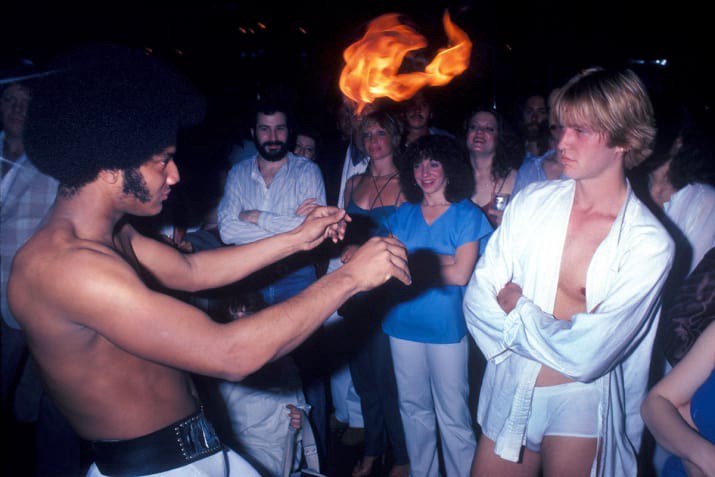
Something which I think is massively overlooked with the track is Stardust’s ability to ensure the constant repetition doesn’t become tedious, instead the catchy beat keeps us engaged without ever deterring from its intended course. Rather than choosing to skip over the track, we never want it to end. The spacey, rhythmic electronics trap us in a bubble where all our earthly problems vanish; every note is faultless, every lyric captures the moment, you never want to leave this pocket-verse of warm, optimistic tones. It exists in a state of pleasure giving perfection, where the loop could theoretically play on forever. Once the play button is hit you can’t help but submit yourself to the infectious sound, picturing yourself in the hazy afterglow of an 80s nightclub, surrounded by flared trousers and hairy chests. Managing to put a smile on the faces of all who hear it, ‘Music Sounds Better With You’ symbolises a simplistic ideal that resonated with its audience in the 90s and still does so today.
No other genre has populated the dancefloor of nightclubs across the world quite like Disco has. Epitomised by repetitive vocals and catchy, liberating instrumentals the genre continues to bless all who hear it with a celestial funk that beckons you to carry out the most god-awful Michael Jackson impression imaginable. It is a genre that seems to consistently fall on welcoming ears and get people in the mood for the night ahead (I mean it is pretty much impossible to hear Sister Sledges ‘He’s the Greatest Dancer’ and not convince yourself this is about to be the greatest night out of all time.) As if ritualised, I will without fail put on my Disco playlist at every pres and right on que the drink starts flowing, people’s eyes light up with optimism and the infectious two-step spreads throughout the room – the three essential signs of a good night in the making and a clear testament to the impressive longevity of the genre. With this in mind I’d like to look back on how Disco curated its inherent danceability and became the stalwart companion of the dance scene.
Originating in the underground New York nightclubs of the 1960s, Disco was born out of a happy marriage between the Soul and Funk genres. A small clique of DJ’s started to deploy two turntables and armed with an endless supply of funk and soul records, from the likes of James Brown, Curtis Mayfield and the O’Jays, they began to revolutionise the nightclub as we know it. Two DJs in particular helped lay the groundwork for the Disco genre we know today. David Mancuso and Francis Grasso developed many of the DJing techniques used in the clubs of today. Before Disco, nightclubs would announce the track that had just played, however, Grasso began to use a pair of headphones to listen to the incoming track, allowing him to seamlessly mix the two together and achieve a continuous mix of high-spirited funk. With this ability to now effortlessly transfer between tracks DJs began to concentrate on selecting music based on the crowd’s responses. The dance floor was about to evolve into a place of uncontrolled energy that was characterised by expressive freedom, liberation and irresistibly catchy synthesizers.
By the 70s Disco music began to emerge that complemented this fresh approach to DJing, and it was this music that repopularised dancing as a social activity. Previously you would often have to bring someone of the opposite sex to get into a nightclub, however, Disco broke this. Disco dancing was the first-time people could go onto the dance floor as an individual, which allowed for a new form of expressive freedom. It is highly common in Disco tracks that the lyrics take a backseat, allowing the instrumentals to do the talking. Repetitive and straightforward the lyrics were relatable enough to draw people to the dance floor, yet not overwhelm them with deeper meaning. Sister Sledge’s classic ‘We are Family’ is built around the repetitive chorus, “We are Family”, which is nothing special at all, but it sends a message of inclusion: everyone in that club is welcome to share this moment, and dance with whoever and however they please. Once this invitation has been extended to the crowd the music takes over, surrounding us in a thick haze of groovy guitar riffs, soulful violin and satisfyingly twangy bass. An essential aspect of the genre is the use of the Four-on-the-floor note pattern, which is used in Sister Sledge’s track to great effect. A rhythm pattern is kept in “4/4” time, meaning the bass drum uniformly hits every quarter note, creating this methodical ‘heartbeat’ rhythm which quite literally pumps the music around your bloodstream. Such a steady beat encourages people to populate the dance floor, almost pulling them there like moths to a lamp, and once there you just can’t help but let loose.
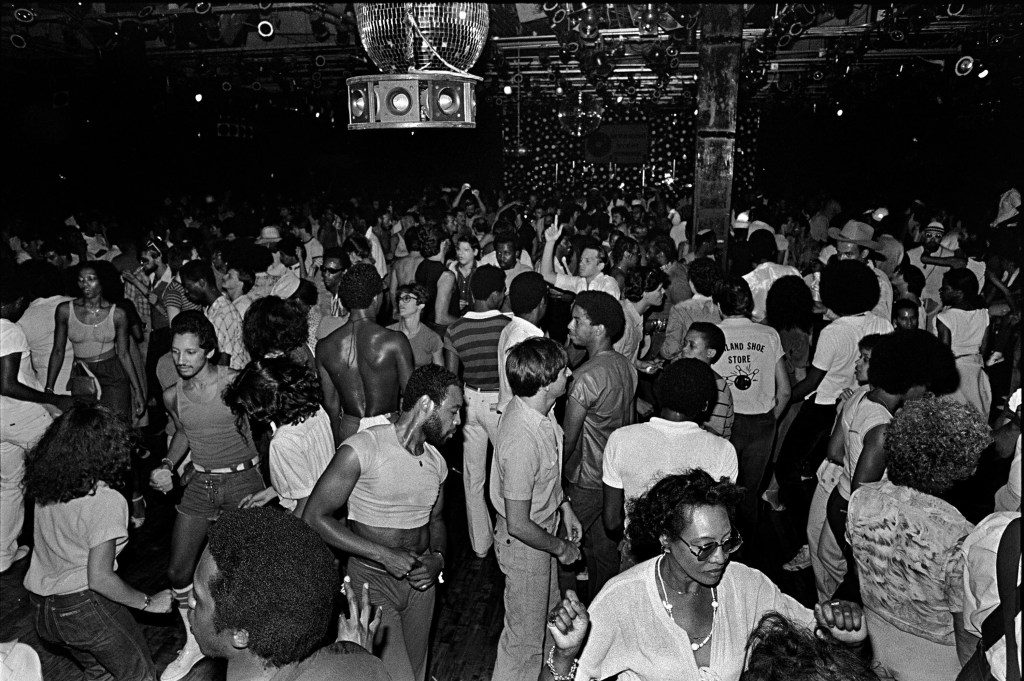
One community with who these dance-focused rhythms resonated with deeply was the homosexual one. During both the 60s and 70s the gay demographic experienced increased homophobia through controlling legislation that prohibited certain uses of their body, such as where they could go and who they could be seen with. Therefore, they found purpose within the energetic, quick-hitting beats of the Disco genre. It was a sound that promoted free-spirited movement, and the gay community where dying to listen. During 1970, in response to the growing message of gay liberation – which reached its climax with the Stonewall Riots in 1969 – the two entrepreneurs, Seymour and Shelley, who owned a series of gay bars in New York, bought ‘The Sanctuary’. Once a failing discotheque, they transformed it into a place that welcomed gay men, and in turn subverted any state control. Re-cast as a multicultural, polymorphous, free-flowing space it quickly became the Mecca of the Disco scene. All the worries of the everyday dissolved away into the pulsating desire of the crowd to ‘stay a while longer’, as this club epitomised everything the genre celebrated. A cocktail of frantic limbs amidst endless Disco loops, ethereal lighting and sequin lined attire, it appealed to more than just the gay community. African Americans and Latino Americans joined the fun as well and altered the dynamic of the nightclub with an energetic authenticity. It’s the people who in everyday life were marginalised and faced discrimination who underpinned the energy of Disco – at last they could move how they wanted to move and be who they wanted to be.
It was this inclusive attitude that made Disco the cultural powerhouse it is today. Dominating the 70s and 80s with anthems like Earth, Wind and Fire’s ‘Lets Groove’ and Chaka Khan’s ‘Fate’, Disco began to influence all walks of life in the industry, as demonstrated by Aretha Franklin’s ‘Get it Right’ and even Bowie’s ‘Let’s Dance’. It is a genre that is well and truly here to stay. Still popular today, for the same manic, rebellious spirit as in its early days, the contemporary audience flock to festivals far and wide to find the promise of the famous “Disco Tent”. Essentially a lawless land, existing in its own pleasure giving bubble far from any of life’s mundane stresses, some of my fondest memories have been made on those muddy fields, surrounded by inebriated two-steppers, horrendous bucket hats and a never-ending stream of Disco Fever. For a night nothing matters but the music, and that’s the beauty of it all.
It’s not quite the same, but here is a playlist to get you hooked.
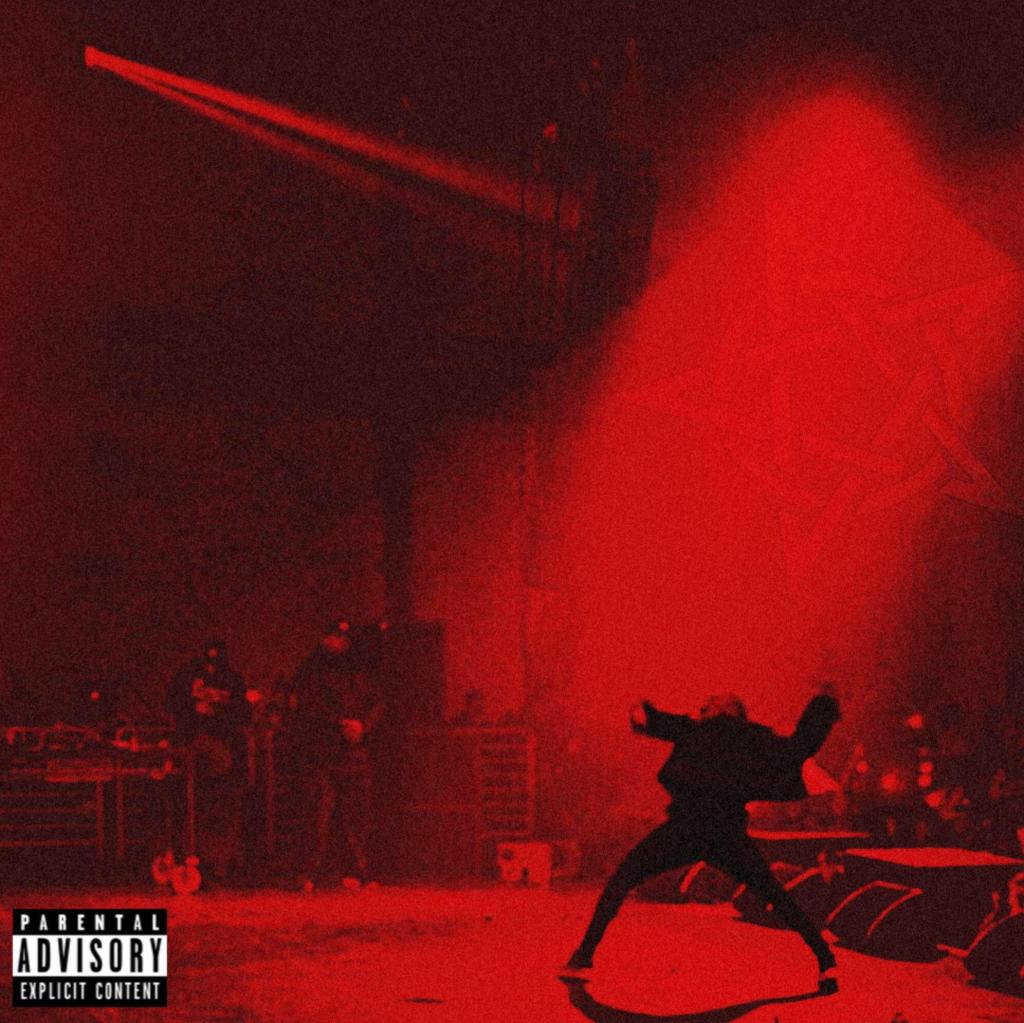
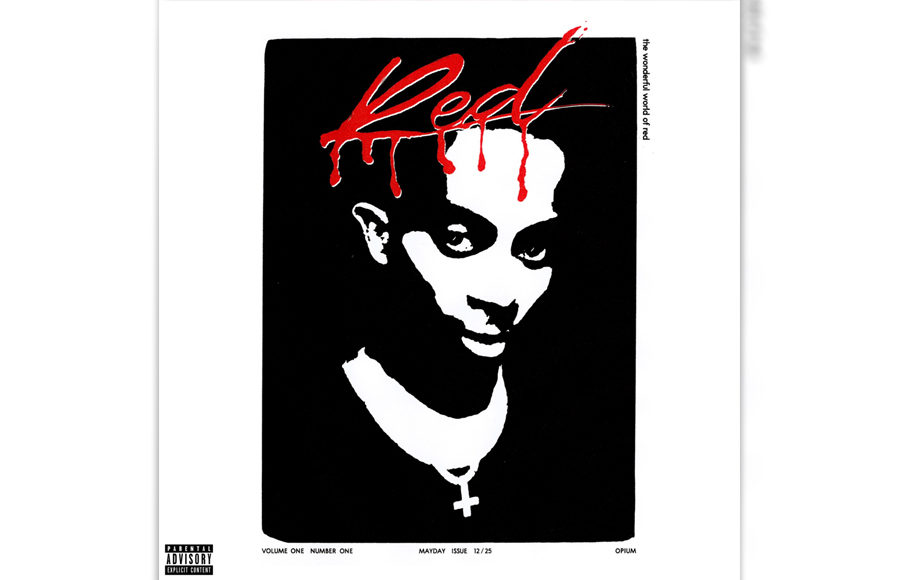
Amidst elusive appearances and promising leaks Playboi Carti’s third studio album ‘Whole Lotta Red’ seemed destined for greatness, and his loyal fanbase expected a masterpiece. His previous two albums, ‘Die Lit’ and the self-titled ‘Playboi Carti’ pioneered a unique, almost psychedelic style of trap music, so when WLR dropped on Christmas Day 2020, Carti listeners were left bemused. The infantile vocals and bouncy rhythms he had become famous for had been abandoned. In their place we find abrasive electronics layered upon punk inspired instrumentals and strained vocals you find at the end of a Metallica concert. It was dark, abrasive and not what fans expected at all.
Wave after wave of critical opinions appeared upon social media, with some people being underwhelmed by the project and others shocked by the coarse aesthetic Carti had landed upon. Various accounts began titling the album ‘Whole Lotta Skips’, and at the time I had to agree. This new direction Carti had taken his sound was too much, there were certainly some good tracks, yet they seemed lost within a sea of vampire themed vocals and ruthless half trap half rock beats. It wasn’t received well upon people’s first listens, with music enthusiast Anthony Fantano giving the record a decent five. However, within his review he suggested the album could create an 808s and Heartbreaks type moment, in which, with time, people learn to disregard the production as messy, instead labelling it as experimental and refreshing. And this exact reaction ensued in the coming months. As more and more people returned to the album, opinions changed and Carti’s masterpiece was unearthed.
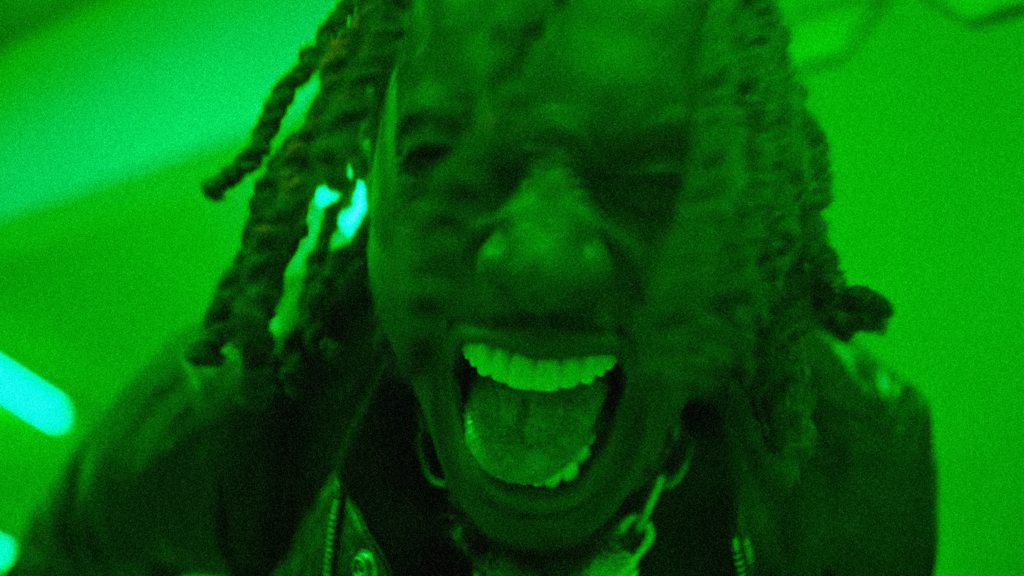
Suddenly the brutal sound of the opening track ‘Stop Breathing’ was music to fans’ ears. This was an album made to be blasted out a car speaker at full volume, it was a new Carti who was frighteningly unapologetic, and people began to appreciate him for it. Carti takes an endless supply of bright and serrated beats and packs them together, end on end, so that the album careens wildly towards an exciting and unknown destination. This new direction is characterised by the feeling of non-conformity, which initially turned so many listeners away. Instead of expected structure we get pure chaos. Entire verses transform into almost blood curdling chants, like those upon ‘On That Time’, in which Carti continuously screams “D-R-A-C-O”. Then there is the skull rattling beat of ‘Stop Breathing’ where Carti works up these exhausted vocals as if he is at the end of a set. This coupled with the immense energy of the production, results in a record that constantly keeps you on the edge of your seat.
For many the standout track is the humorous ‘Vamp Anthem’. Totally unique in its style, the song samples composer, Johann Sebastian Bach’s piece ‘Toccata and Fuge in D Minor’ creating this twisted, trap take on Gothic organ music. Lyrics like: “You come ’round by my gang, we gon’ let them bullets fly”, fill the track with references to Carti’s reckless lifestyle, and support the hectic energy of the song. With a two-minute run time it encompasses the vampiric aesthetic displayed throughout the album and highlights the zany ideas at the records core.
As the album progresses into its closing segments the electronic sounds alter into those more atypical with Carti’s iconic style. The three-track run of ‘Sky’, ‘Over’ and ‘ILoveUIHateU’ are typified by ethereal synths, snappy trap drums and of course Carti’s trademark vocals. They are all closer to the classic Carti sound and remind us he is still capable of the catchy, spacey beats we know and love.
It is very rare to get an album that is so ahead of its time that it is initially disregarded entirely. Kanye did it with 808s, Pink Floyd did it with ‘The Wall’, and now Carti has done the same with ‘Whole Lotta Red’. Its progressive and drastically ambitious with its ideas, making it one of the most exciting projects of recent time. I urge you, if you haven’t already, give it one more listen.
For decades guitarists all over the world have fiercely debated a hot topic: What is the greatest guitar solo ever? Currently there is an illustrious list of big hitters at the very top. The likes of Jimmy Page’s awe-inspiring solo on Stairway to Heaven and David Gilmour’s dreamy performance on Comfortably Numb frequently appear on these star-studded lists, however, for me I have always been drawn to a solo that appears a little further down.
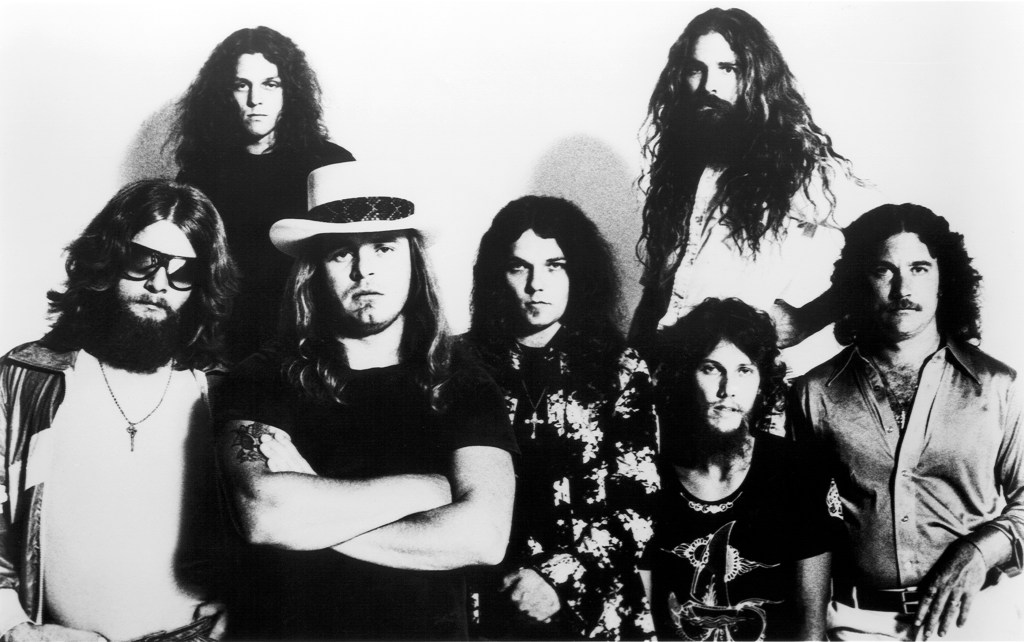
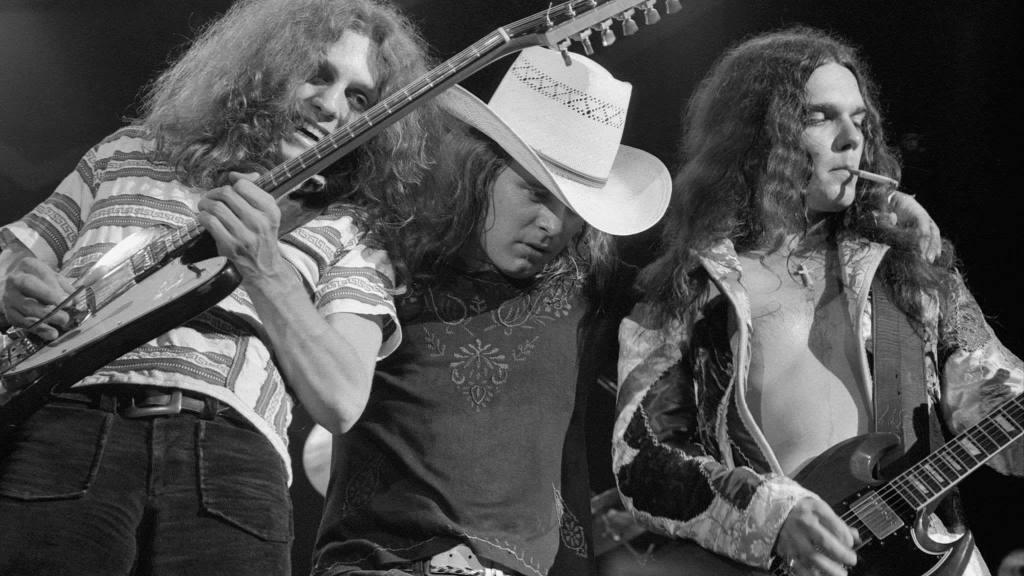
Lynyrd Skynyrd’s Free Bird.
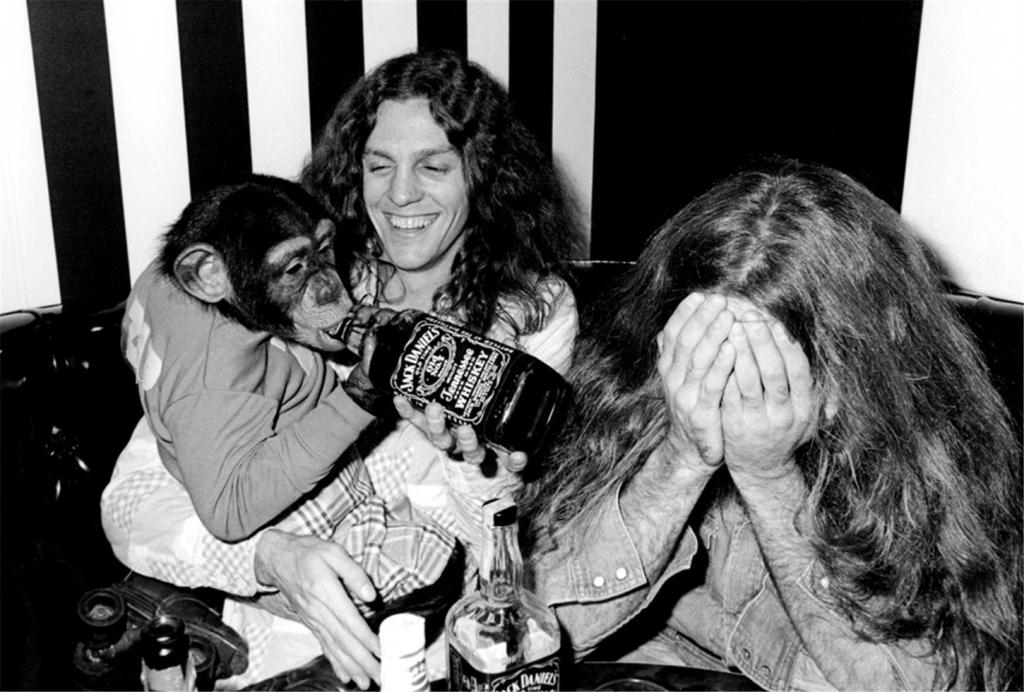
A seemingly never-ending descent into Rock and Roll hellfire, this guitar solo has always done something different for me than the others. Whilst Gilmour’s piece delicately touches the ears with an almost astral-like projection of pleasing chords, Lynyrd Skynyrd slam on the accelerator in a wild fashion as they franticly show us just how much can be done with six strings – or 12 in this case, but we’ll get back to that later.
When one of the band’s guitarists, Allen Collins, first presented the song to lead singer Ronnie Van Zant it was met with cold rejection. Zant said it had too many chords to try and write lyrics for, feeling anything he sang would get lost in the tornado of chord changes and harsh licks. Eventually Zant warmed to the idea, yet the track was much slower, (more of a rock ballad than anything else) and the giant runtime was sliced down. Concert after concert the band wrapped it up after four or five minutes, lending the song a more sorrowful tone. If you listen to the first five minutes of Free Bird, you can’t help but sense this feeling that there should be more around the corner.
One evening after an hour of emptying his lungs out onto the mic, Zant needed to give his voice a rest and so advised the band to play on “a little longer”, allowing him to regain his vocal range. So, Allen Collins and his partner in crime Gary Rossington began to jam on into the night, transforming that little while longer into the most iconic guitar solo of all time. Who cares if it has too many chords to write lyrics for? Sometimes you just have to let the guitar do the speaking, because sometimes, we can’t always get across quite what we want to say.
Instantly recognisable for its breakneck speed, Lynyrd Skynyrd utilise a technique called doubling, injecting their guitar solo with a hit of hyper-kinetic energy. In the studio recording Collins played the solo twice over, placing a slight delay between each segment. This resulted in two separate performances stacked on top of one another, intensifying the overall mojo of the performance and creating a more explosive impact to each note. Rather than simply playing the same take twice, Collins recorded each layer separately, playing every section from memory. In doing so the solo maintains that same recognisable spontaneity from the jamming session it was birthed from. At every twist and turn you can hear Collins desperately try to catch up to himself, quickening his pace, correcting his chords, and thus, blessing the track with a sense of raw undomesticated speed.
In an interview during the mid 70’s Van Zant discussed what the track’s meaning is, to which he said:
“It’s about what it means to be free, in that a bird can fly wherever he wants to go,”
The lyrics certainly echo this idea, and the guitar closely follows suit. Coming in at around the 4:55 mark, the guitar solo lasts a staggering 143 beats and such length suggests that it may never come to an end, instead flying on like a bird into the sunset. Across its colossal runtime Collins and Rossington follow an unpredictable path of highs and lows, imbuing each chord with a wild fury as they are quite literally set free on stage. Testing every fibre of their skill as guitarists they dance across the musical spectrum, demonstrating suspenseful build-ups like the one at 6:32, and cataclysmic breakdowns at 8:14. Effortlessly slipping in and out of new licks to great impact, the two display an untamed mastery of the instrument and perfectly symbolise what it means to be free. Lynyrd Skynyrd raised up a middle finger to the music industry and played a four-minute guitar solo just because they could – and isn’t that what freedom is, doing something just because you can?
Still riding the counterculture wave of the 1960s, popularised by movies like Dennis Hopper’s Easy Rider, Americans were more politically aware, more adverse to government control and more active in their beliefs. Free Bird, I think, wonderfully captures this cultural zeitgeist, and like I alluded to before, perfectly gets across just what we can’t find the words for, and the American people agreed. Within a hazy fog of manic chord changes and adrenaline pumping riffs something resonated with them; whether it was an unapologetic desire to act up or simply a need to escape the traumas of everyday life, we will never know. But what we do know, is that whatever it was, it was fucking awesome.
Disclaimer: I first wrote this before ‘Donda’ released!!!
“July 24”
The scheduled date for Hip-Hop icon Kanye West’s 10th solo studio album, ‘DONDA’. It has now been over a month since Kanye’s announcement and alas we are once again left yearning for another elusive record. This is far from the first time Kanye has failed to reach his deadlines. His critically acclaimed album ‘The Life Of Pablo’ was a staggering 531 days late, whilst his most recent, gospel inspired album, ‘Jesus Is King’ was 29 days overdue. Whilst perhaps aesthetically different, both albums shared the same chaotic rollout of tracklist changes, missed deadlines, and manic Kanye tweetstorms. However, the unorthodox nature of Kanye’s album releases doesn’t quite reach its peak there, it was with the mythical ‘Yandhi’; a word that almost sends shivers down the spines of every Kanye West fan. Intended to be a spiritual successor of his Grammy-nominated album ‘Yeezus’, ‘Yandhi’ was announced for the 29th of September 2019, but never came; instead falling into the abyss of Kanye’s unreleased records. Perhaps then with all this in mind, we should be wary about ‘DONDA’ following the same path? Yet, it’s within the madness of Kanye’s unreleased music that we can find moments of genius.
Kanye West is truly one of the great innovators and influencers of the contemporary music industry and his discography parallels such a claim. As good as his various albums are, they are only the tip of the iceberg. His collection of scrapped projects is as vast as it is varied. So how much music is there?
Wolves – Drake/Kanye joint album teased in 2015
Turbo Grafx 16 – A project that was later released through TLOP
Cruel Winter – An intended successor to G.O.O.D Music’s compilation album ‘Cruel Summer’
So Help Me God – Another album designed to follow up from ‘Yeezus’
The College Drop Out (Original Version) – Before its official release, an earlier version leaked, forcing Ye to make some altercations.
Good Ass Job – Created as a sequel to ‘Graduation’
Watch The Throne 2 – Announced by Kanye in a 2018 tweet
Yandhi – Teased on twitter after ‘Ye’ in 2018
Some of these scrapped projects were precisely that, nothing more than fleeting ideas within the ever-changing psyche of Kanye West. Whilst others moved further down the production line, developing into whole albums and ultimately so much more.
Both ‘So Help Me God’ and ‘Yandhi’ stand within the latter category as tracklists, artwork and even the albums themselves can be found upon the internet. As previously mentioned Ye’s discography is of the highest quality, and it’s clear he only puts out what he feels is up to standard. However, I can’t help but feel each of these scrapped albums would fit in perfectly to his catalog of music. ‘So Help Me God’ seems to tackle the more introspective, psychologically hurt side of Kanye West as he accepts some of his own flaws. Within the album, he blends together booming organs and electronics with a softer aesthetic of piano chords and heartfelt lyrics. It’s throughout the albums 15 tracks that we see the uncontrollable god complex of Kanye (symbolized by the electronic sounds) crash head-on into the caring family man we know he can be. The album includes some of Kanye’s best work, such as the moving ballad ‘Awesome’ which echoes the sentiment of his 2013 track ‘Bound 2’. Then there is the masterful track ‘I feel like that’, which gives us an intimate insight and exploration of Kanye’s mental state. Throughout its 3 minutes and 48 seconds, Kanye utilises various spoken verses as he exclaims his experience with mental health, such as “Nervousness and shakiness inside”. Such a technique is accentuated through the tracks minimalist beat, thus, placing all the focus on Ye’s intimate lyrics; creating what could have been a true classic of his discography.
Nevertheless, the magnum opus of Kanye’s unreleased genius is the mythical ‘Yandhi’. To think that West deemed ‘Yandhi’ unfitting of his music collection seems almost crime worthy. Yet, through websites like YouTube and Reddit leaks of the album arose, giving ‘Yandhi’ a new life and as a result constructed its own unique legacy. The first few leaks arose in mid-August of last year – in particular, multiple postings titled “Not Yandhi”. These leaks took the music scene by storm, leading to various positive reviews. Since the explosion of leaks, the album has become immortalised within a musical space of underground secrecy. It’s not unfair to suggest that some of Kanye’s greatest tracks and ideas appear on the album. The ‘Yeezus’ inspiration is clear as immense electronics reverberate off our eardrums as well as Ye’s trademark screams that we have seen before upon ‘I am a God’. Simultaneously, however, we see a merging of the ‘Old Kanye’ through his bouncy rhythm and downright funny lyrics, resulting in the birth of a mesmerising album. There are a few songs within the album’s progression that are embedded with true greatness. ‘Hurricane’ is perhaps one of these tracks, as Kanye dips into his God complex yet again, stating that he influenced the new wave of contemporary rappers with the lyric: “Dropped the wave runners, now we run the wave”. ‘Law of attraction’ is another one of the unreleased greats. It is built around the solitary sound of a car alarm and slowly builds outwards through the layering of synths, 808s, snares, drums, and Kid Cudi-Esque auto-tuned humming. By the track’s climax we are met with a truly breath-taking musical piece of epic variety. Ye harnesses an aesthetic akin to that of an opera house within the song’s runtime. So many instruments merge together in perfect harmony, resulting in a piece that arguably competes with ‘Runaway’s’ perfectionist feel.
Ultimately, both of these records as well as others from Kanye’s ocean of unreleased music clearly have great quality and could slot into his collection of music. However, I think whilst Kanye can seemingly turn anything he touches into gold, the greatness of his scrapped projects sprouts from somewhere else; their illegality. There is something about their secrecy that adds a new dimension to the experience of listening to them. An adrenaline-fuelled rush comes over us as we frantically try to listen to all the tracks before they are inevitably torn down off YouTube again. It’s their aesthetic of exclusivity and illegality that gives them a quality that is unobtainable for any officially released music. Through the spread of leaks, a whole new music sub-culture has risen to commemorate this genre of almost illegal music. Existing on the website Reddit a whole community is dedicated to Kanye West’s unreleased music, in the form of ‘r/yandhileaks’ (now r/WestSubEver). It’s a space where individuals share new leaks, better versions, and theories surrounding the elusive ‘lost tapes’ of Kanye’s discography. Having these hidden projects occasionally rise to the surface through leaks embeds them with a sense of classic underground Hip-Hop culture, one which parallels that of 1980’s street rap. Whilst it would be nice to have them officially released and floating throughout the mainstream, they gain a powerful, secretive aesthetic from remaining within the shadows. It seems that Hip-Hop’s greatest influencer has influenced the industry without even realising it.
Birthed from a heady mix of Gen Z angst and increased access to cheap yet professional music software, Bedroom Pop is quickly becoming one of the decade’s most exciting genres. With a meteoric rise to fame, for all the right reasons, it is a fascinating genre which has somehow found itself being characterised by place rather than sound. Diverse in nature, its artists come from varied cultural backgrounds and take inspiration from a plethora of genres. From the offbeat synth leads of shoegaze to the nostalgic fuzziness of lo-fi, Bedroom Pop mixes a variety of sonic themes together, resulting in a refreshing and ultimately reassuring approach to modern day pop. Constructed within the comforting realm of the bedroom, Bedroom Pop has pushed out against the boundaries of the music industry without ever leaving the room.
Central to the genre’s popularity is the highly accessible DIY aesthetic that shines through within many of its tracks. Emerging singer-songwriter mxmtoon declared in an interview with NBC that:
“Anyone can make music, and I think that is the idea behind bedroom pop”
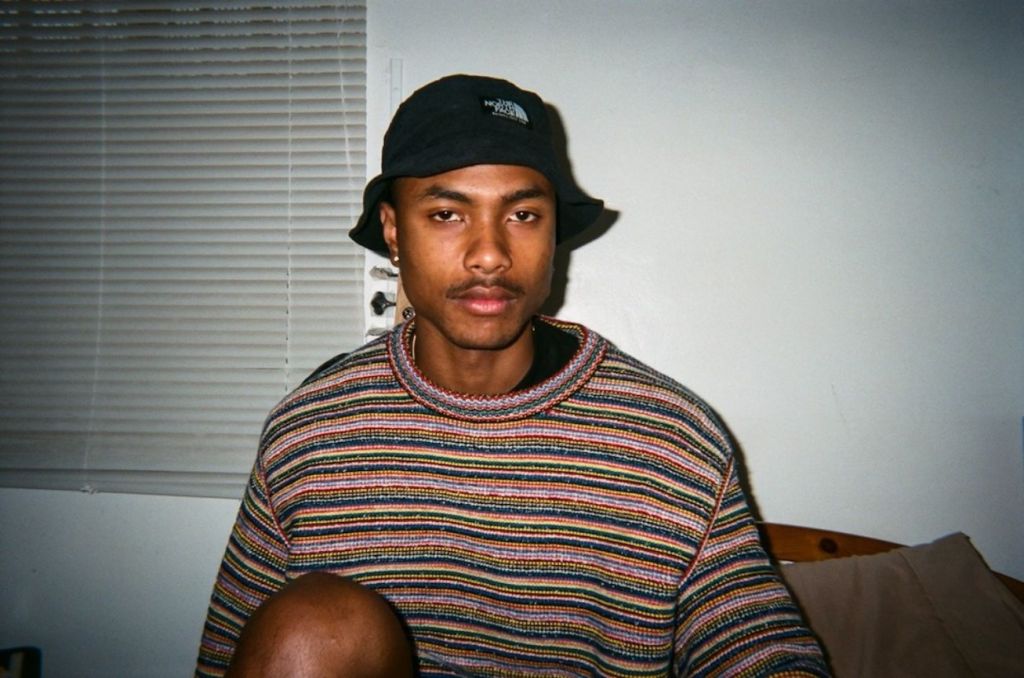
With more and more high-quality music production programmes being created anyone with a laptop can try their hand at the genre, resulting in a surge of innovative yet simplistic beats. In an industry which is increasingly controlled by corporate labels, Bedroom Pop fights back, encouraging creative expression over diluted chart toppers. For angsty teenagers the bedroom has always felt like a sanctum from the cruel world and this feeling resonates within the genre. Predominately existing on the fringes of the music world, artists find immense freedom within the safety of their own bedroom. With just a laptop and their thoughts, we see musicians become vastly intimate within their songs. Emotional barriers are naturally deconstructed within our bedrooms, it’s a safe space where the mind often wonders to more sensitive topics. The likes of Steve Lacy and Current Joys explore complex themes of adolescent confusion and emotional strife, something which their younger audience can strongly relate to. It doesn’t only sound like a genre anyone can make, it’s a genre anyone can sing along to.
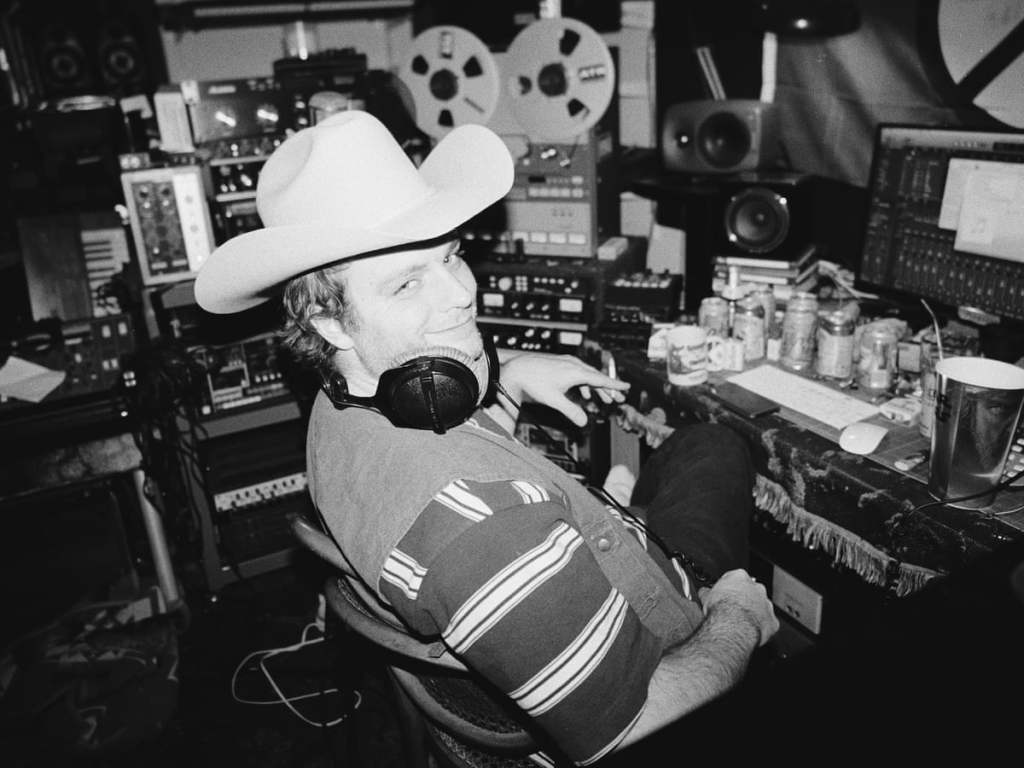
Because of the genres inherit accessibility it has resulted in an incredibly diverse cast of artists who serve as a poignant example of Bedroom Pop’s unwavering creativity. Each with their own inspiration and ideas, individuals within the genre have curated whimsical, comforting sounds, each unique to their personality. Perhaps pioneering this style was the indie culture icon, MacDemarco. Adhering to the philosophy that less is more he uses striped back minimalist instrumentals, and soft vocals to create a dream like atmosphere. One of the genre’s most popular figures, Sven Gamsky, known by Still Woozy, clearly takes influence from Mac’s spacey minimalism, yet injects it with his own psychedelic approach. Bouncy synths and distorted guitar solos work alongside his strained, weary vocals to fashion a transcendental sound that leaves you staring off into the distance. Then you have the likes of Rex Orange County who seamlessly mixes the likes of Hip-Hop, Jazz and Soul to incredible success. All these different influences result in an ever-changing tone that’s always different but still reassuringly similar, with a woozy, introverted sound that wraps your ear drums like a cashmere throw. Yet if you listen just a little closer, you’ll find that Bedroom Pop very often wears its feelings boldly upon its sleeve.
More than ever, the distance between creator and consumer is immeasurable, with artists existing as inaccessible figures within the far-off realm of pop culture. However, Bedroom Pop has drastically reduced this disparity, deconstructing the celebrity figure into the everyday individual, in turn exaggerating the theme of intimacy. Often posting their tracks to YouTube first, artists can instantaneously go from obscurity to fame. Clairo’s hit single ‘Pretty Girl’ is the perfect example of this straightforward approach to music publising. Uploaded to YouTube when she was just 18 the track epitomises the genres brutally honest topics, as she openly explores a past relationship in which she felt the need to “be the perfect girl for another person”. Recorded in the humble setting of her own bedroom, using nothing more than the camera on her laptop, the music video is beautifully simple, directly mirroring those innocent iMovie’s we all at some point forced our parents to watch. Clairo shows us exactly who she is, and tells us exactly how she is feeling, nothing is held back across the tracks three-minute runtime. In being so raw both lyrically and stylistically Clairo had already fashioned an authentic anthem to be enjoyed by the younger generation, however in choosing to initially upload to YouTube she further deconstructed any potential distance between listener and artist. Anyone can post to YouTube and anyone can watch something on YouTube, so Clairo consciously portrays herself as nothing more than that; she both is the everyday and experiences the everyday. She’s not trying to be a celebrity superstar; she’s just being herself and that’s what made ‘Pretty Girl’ so popular, the listener can just as easily picture themselves up upon the screen. The accessible lyrics and authentic videos of Bedroom Pop have danced around corporate control thanks to the help of platforms like YouTube, resulting in one of the most intimate genres to date which is totally free to quietly discuss some of life’s more sensitive topics.
With artists from a variety of cultural backgrounds, there is an excellent representation of minority groups within the genre who have taken advantage of the liberty YouTube offers and infused their own identities within their music. One artist who has taken advantage of this creative freedom is Marie Ulven Ringheim, better known as ‘girl in red’. Skirting around potential gatekeepers by originally posting to Soundcloud and subverting label restrictions, she openly discusses themes of queerness on tracks like ‘girls’ and ‘i wanna be your girlfriend’, quickly becoming an important LGBTQ figure in the music industry. The latter track was recorded in her bedroom and posted straight to YouTube in 2018, and since it has amassed 120 million streams on Spotify and acted as a cathartic anthem for so many teens struggling with their own sexuality. Ulven and others have transformed the bedroom into a place of liberation for minority groups. Artists can create a conversation with their audience, one which encourages differences and reassures the listener that they aren’t alone in their struggle, ultimately resulting in a refreshingly conscious approach to music that has seen the genre become immensely popular.
Upon first listen Bedroom Pop is a never ending starry horizon of soothing vocals and dreamy jams, but upon further inspection it becomes so much more than that. Made up of a new guard of innovative, exciting individuals it’s a subtly rebellious genre that quietly stands up for its own interests and constantly pushes the boundaries of what can be achieved from the most personal room in the house.
It also happens to sound really fucking cool so here’s a playlist to set you on your way.
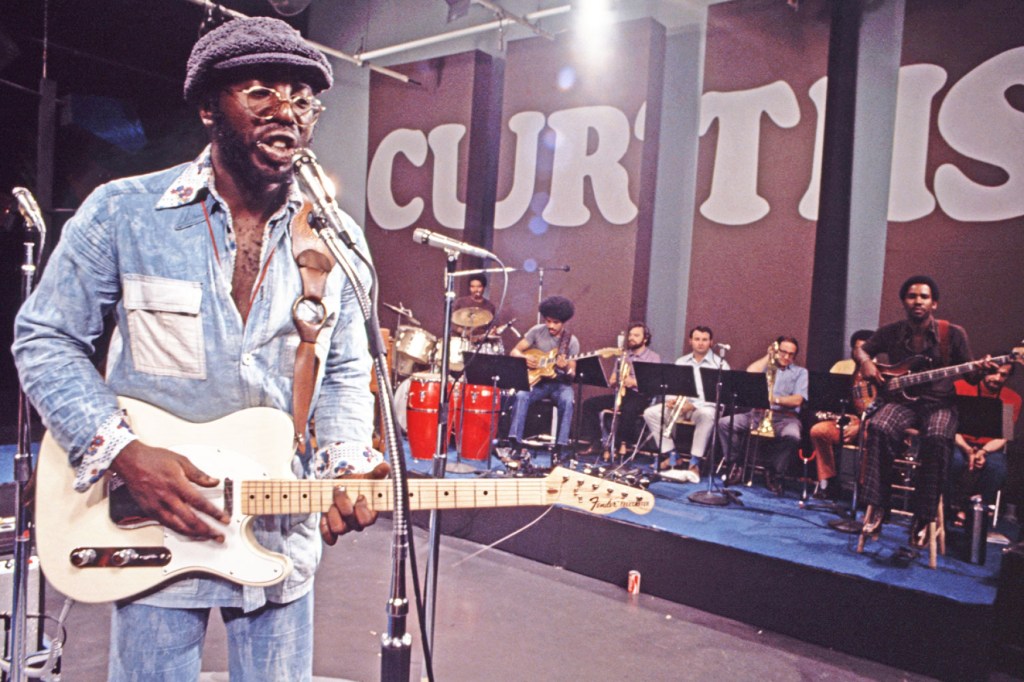
During the depths of the first lockdown one way I passed the blur of monotonous days was by delving into new music genres that I hadn’t previously given thought to. With the sun blazing down it seemed rude not to test the waters of the soul genre. Epitomised by funky instrumentals, high pitched vocals and a politically conscious message, these facets of the genre were all warmly welcomed with open arms during the politically unsure times of lockdown. However, for me one track in particular stood out, Curtis Mayfield’s soulful ballad ‘So In love’. An artist who oftentimes used his voice as a force in the political scene, ‘So In Love’ takes up a different tone, instead offering a much-needed reprieve from uncertain times, something which certainly resonated with me during a period of fast approaching deadlines and endless restrictions.
From a young age Mayfield found companionship within religion, and at just the age of seven he sang in the choir at his aunt’s church, the Northern Jubilee Gospel Singers. This love for Christianity was enhanced during his time in the soul / gospel group ‘The Impressions’, where he first made a name for himself. Religious preaching eventually surfaced as a central theme in Mayfield’s solo work and became the cornerstone of his politically conscious pieces. The 1960’s was overflowing with social turmoil, seeing the assassination of JFK and Martin Luther King, as well as an increasing number of Civil Rights protests as racial injustice worsened. For oppressed groups in America there seemed to be no light at the end of the tunnel, they needed a message of unity, perhaps from above, and for many that came from Mayfield. Unveiling song after song that would embolden and empower the many that joined along in the campaigns for equal rights, his message was relentless as he sang of the triumph of coming together as a unified people.
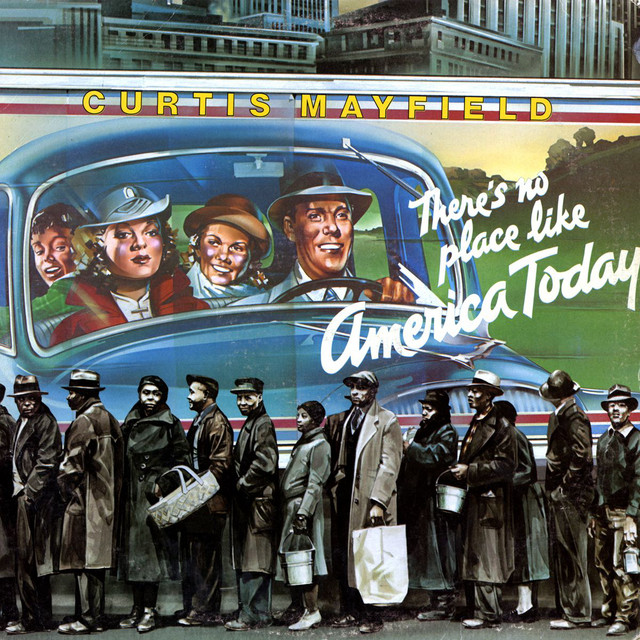
There is no kidding that his hard-hitting, politically mindful epics were vastly important, as they soundtracked the civil rights movement and rallied a people to stand up against a common enemy, however, his tracks which took a more emotional approach were just as crucial at raising people’s spirits. Appearing on his fifth studio album There’s No Place Like America Today, ‘So In Love’ sends an equally important message of reciprocated love, reminding people that there still is something worth fighting for.
An album charged by thoughtful political and racial conversation, There’s No Place Like America Today evokes its own time and place as surely as the album cover represents the chasm between American dreams and street-level reality. Mayfield tries to unpack the difficult question of: what has changed for the African American in the 1970s? With shock, disenchantment and outright paranoia still prevalent, the answer is shockingly little, so Mayfield uses ‘So In Love’ as a welcome breath of fresh air amongst all this uncertainty. One of the most sombre funk tracks ever made, the song opens with a soothing pluck of a bass and a delicate organ progression, setting the mood from the offset and preparing you for five minutes of total relaxation. Across its course nothing is wasted on the track, every note hits with purpose and effortless elegance, creating this heavenly bubble outside of all life’s stress. The organs provide a sturdy backdrop, from which Mayfield builds on; the rhythmic bass trundles on in nonchalant fashion, whilst the angelic trumpets provide an irresistibly cheery disposition to the whole track.
Whilst this instrumental perfectly encapsulates the untroubled life of happy matrimony, Mayfield’s lyrics take it a step further, acting as a pleasant reminder of all the good still left in the world. One of my favourites is his eloquent phrasing of:
Look at me, look at you
Highlighting those pleasant silences, you can only share with that special someone, his pairing of “me” and “you” alongside the balanced clause emphasises the effortlessly joy of harmonious love. Continuing to paint this simplistic picture of loving infatuation, Mayfield takes his brush and creates a picture of “You are you and I being me”. Hyper-personal, his constant use of personal pronouns highlights the importance of just being yourself in a relationship. Forget the pressures of the world, and just live in the sweetness of the moment. Ultimately, that is the entire message of the track. Serving as a quiet oasis in a world of strife Mayfield set out to take people’s minds off the strife spreading throughout America, even if it was just for a moment. But as history has proven, sometimes a moment is all it takes.
Section 63: Powers to remove persons attending or preparing for a rave
“This section applies to a gathering on land in the open air of 20 or more persons (whether or not trespassers) at which amplified music is played during the night (with or without intermissions) and is such as, by reason of its loudness and duration and the time at which it is played, is likely to cause serious distress to the inhabitants of the locality”
This piece of criminal legislation was introduced in 1994 by the British Government to restrict the size and number of raves. The establishment desperately don’t want us to party, yet we still do; we always will, it’s in our blood. Since the passing of this bill, rave culture has grown and grown, becoming almost infectious across the world. Yet, it has changed drastically since its beginning, with the likes of ‘Burning Man’ festival becoming almost unrecognisable to its origins within the dark, dinghy warehouses of the UK. Whilst the American rave scene may be drastically different in an aesthetic sense from the UK’s, the purpose is still the same; to rebel and to escape.
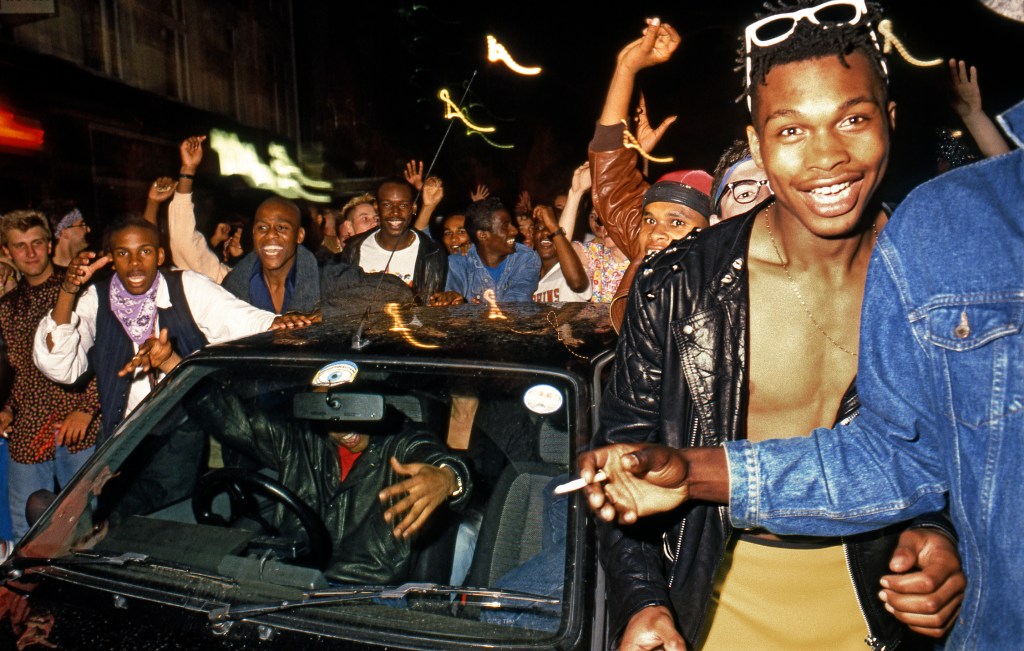
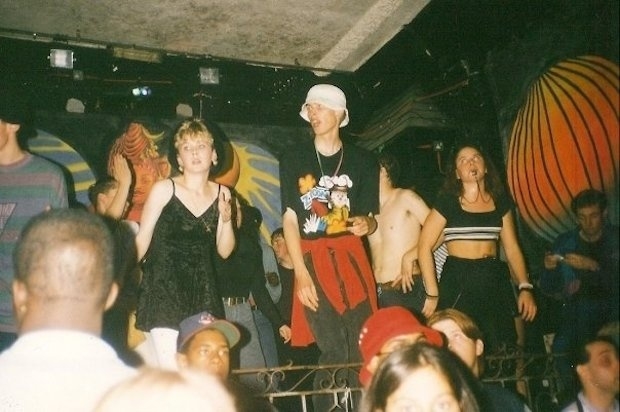
Before I delve into the resurgence of the rave scene within the modern generation and its subsequent evolution, I think we must first look back at its conception. Born out of the gloomy, sweaty basements and warehouses across the United Kingdom the rave scene was originally a counterculture icon. It didn’t care about the glitz and glam of other musical genres; its niche characteristic was that individuals defied control from government authority. The act of partying in this kind of self-indulgent fashion originates from a point of rebellion, a behavioural trait that will never disappear. Ultimately, the UK rave scene was conceived as a middle finger in reaction to Thatcherism, and thus, the establishment. Margaret Thatcher’s political philosophies of free markets within the 80s and 90s were the match that set the rave scene alight. Low taxation, privatisation of state-owned industries, and a retrenched welfare state lead to a decreased role of the state in the everyday lives of citizens. As a result, this created winners and losers, with the losers falling victim to the brutal free market. It was these ‘Losers’ that constructed the rebellious act of raving allowing them to use the creative expression of partying to deal with the social calamities. Rave culture began as a way for marginalised communities to forget about the high unemployment and hopelessness that they faced. It provided a feeling of escapism like nothing else; constructing a lawless space on the fringes of society where people flocked to forget the monotony of the 9 to 5 and transcend to a place free of judgement and responsibility.
Almost instantly this subculture of music became contagious, as it exploded throughout societies across the UK. Genres like Techno, Acid House and Jabber stormed into the charts with no regard for the rules. Steve ‘Silk’ Hurley’s electronic anthem “Jack Your Body” climbed to the top of the charts in the UK during 1987. Underground DJs also began a meteoric rise into popularity such as Carl Cox and Nicky Holloway. Rave culture was entering the mainstream and Politicians couldn’t stand it; people were having fun, how dare they!
Newspaper headlines started to follow suit as they grabbed public attention by decrying the bacchanalia and hedonistic behavior of ravers – especially their drug usage. The Newspapers worked in tandem with Politicians to portray ravers as ‘the problem with Britain’ and thus, frame the rave scene as inherently disorderly. Nobody wanted the ravers to party, and with the passing of the previously mentioned ‘Section 63’ the law supported this oppressive desire. Nevertheless, it was the establishments’ hatred for the culture that fuelled the youth’s love for it. In recognizing rave culture as rebellious and attempting to control it the Government only accentuated the culture more. Ravers now had a purpose to party into the early hours; to piss everyone off. In being labelled a societal problem it only emphasized a new characteristic, that of rebellion. Thus, raving became more than just a genre of music, it became a whole revolution constructed around the idea of true liberty. The adrenaline pulsing throughout a raver’s blood comes from that feeling of illegality (and perhaps some cocaine). In the words of actor Peter Fonda, “We wanna be free, and we wanna be free to do what we wanna do”, and rave culture provides precisely this libertarian release. On the dance floor of some random Sweatbox in London, two-stepping to infectious electronic beats, surrounded by drug-fuelled individuals, is weirdly one of the few places we can find authentic liberty.
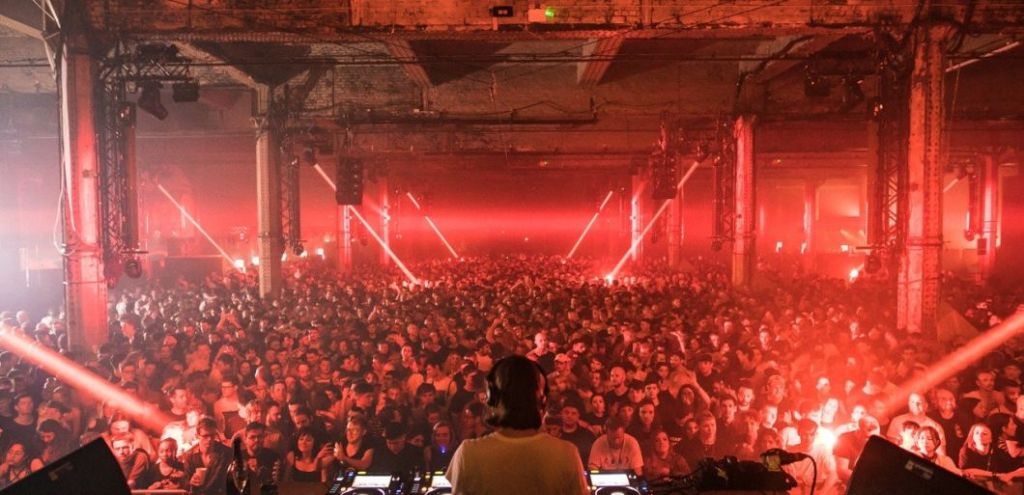
These characteristics of independence and insurgency resonate strongly within youth culture. Because of this ideological connection between the demographic and the genre, rave culture has experienced unprecedented growth within both the youth of the UK and America. Aesthetically the UK scene has stayed fairly close to its roots. Events such as Warehouse Project and Printworks keep the spirit of 90s rave culture alive whilst giving it a modernized coat of paint. Warehouse project especially seems to pay homage to the earlier days of raving as it oozes love, escapism and piss ups. You look through the crowd at WHP and you will see everything the government hates; lads dressed in “menacing” all black, girls in supposedly “distasteful” tight clothing and keys dipping into mountains of class As. It’s the epicentre of modern-day rave culture. The line-ups seen at such events are reminiscent of early acid house and techno, through the likes of Bicep and Annie Mac. However, we have recently seen a musical diversification towards the contemporary scene through performances from Grime artist Skepta and Hip – Hop star Joey Bada$$. Despite the UK scene perhaps modernizing into newer genres, the venues don’t forget the classical scenes of the 90s. In walking through the gates of Warehouse Project you seemingly escape reality as you proceed to pass back down the corridor of time. The sky-high ceilings and red brick walls seem to reverberate tales of a previous era. Even away from the huge, flashy events, the ideology of rebellion lives on. It’s almost a rite of passage for the 16-year-old English lad or girl to sneak out to get blackout in a park or friends house. Across the country, news reports have confirmed illegal raves every weekend over the past few years. Despite being decades apart, the contemporary scene has not forgotten where it came from. A rebellious nostalgia has been passed down through generations, catalysing our need to be free.
If a Brit was to gaze across the Atlantic, they would witness a very different type of rave culture, one which they may perceive as “weaker” and “vainer”. Yet in reality, the American scene is just as electric, it’s simply a different kind of energy. Within a visual sense, the two scenes drastically juxtapose each other. The UK attempts to go back in time, whilst the contemporary American rave looks closer to the inside of a spaceship than the inside of a warehouse. This antithetical aesthetic has developed due to the different musical genres at work here. By far the most popular genre within the American scene is the global sensation of Electronic Dance Music (EDM). Personified by booming rollers, high pitched electronics and astronomical energy; it’s no wonder that American raves feel otherworldly. In order to mirror the cosmic pulsations of EDM, many rave festivals incorporate lights, lasers, projections, and fireworks to support the celestial motifs. On the surface layer, the two rave scenes couldn’t seem further apart, yet in reality, the core purpose of raving is still there. We could visualize the different scenes as two sides of a coin; the same but different. The construction of alien-like festivals, such as ‘Ultra Music Festival’ in Miami, creates that same type of escapism at the heart of early rave culture. In fact, it could even be seen as amplifying it to the next level. What better way to forget about your everyday problems than to enter a space of worldly transcendence?
Furthermore, those rebellious aspects still persist, just within ways more akin to hippie culture. One of the phenomena of the American scene is that of ‘Kandi’ bands. A bracelet like item, engraved with messages of peace and love, which are exchanged between ravers in an act of respect. This ritual of exchange is named P.L.U.R; an acronym for Peace, Love, Unity and Respect. It’s perhaps easy to see why the experienced British raver would frown down on essentially trading bracelets within a rave, however, the rebellious intentions can be seen shining through. These messages of peace and love become reminiscent of the original hippie counterculture. Hippies of the 1960s rejected the establishment, government oppression and ultimately mainstream American life. Instead, they preached messages of unified love and sexual liberation. Through the P.L.U.R philosophy that the American raver uptakes them too preach these values of rebellion. For brief moments they can leave behind the controlling establishment and live within a space of total harmony, similar to that of the hippie revolution. Thus, whilst visually antithetical the purpose of the American and British rave scene remains the same.
Red Stripe. North Face. Jumping fences. Strobe lighting. Repetitive music. It’s a universal language. A language that brings people together from all backgrounds to forget life’s worries and to rebel against the rules, whether it be for a day, a night or a weekend, ravers will always find a way to keep the party going.






 The Jukebox