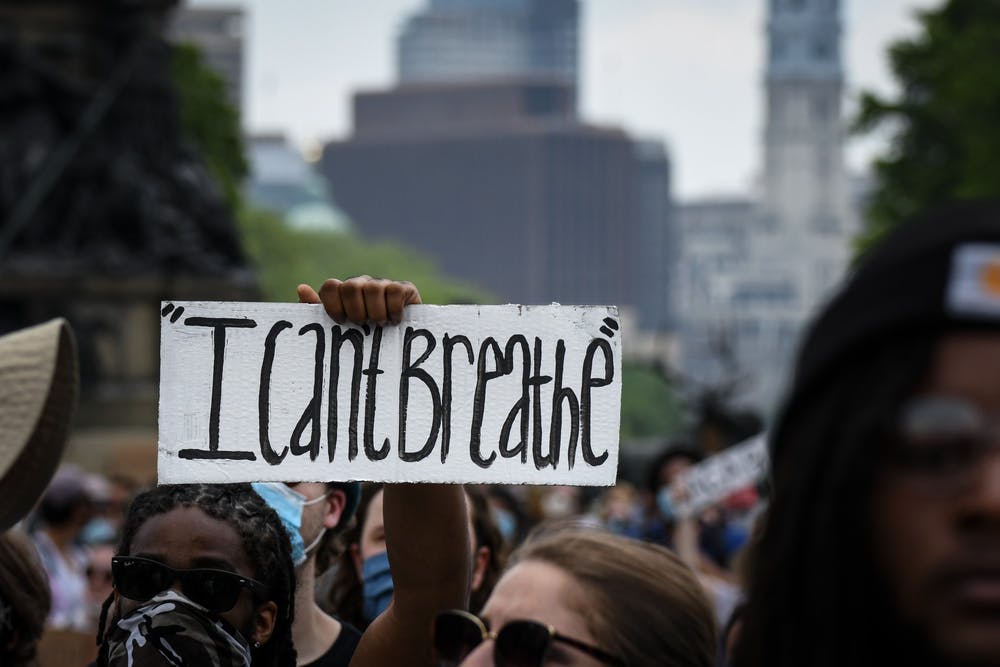
“I can’t breathe”
Three words. One man. Sixty Countries. One purpose.
By now I’m sure most people reading this piece will be aware of the unjust and inhuman nature of George Floyd’s murder. Thus, it is not my intention to dwell upon the event itself, instead I want to look towards a brighter future, focusing upon the incredible reaction from the public in the wake of such discrimination. How people reacted to Floyd’s murder across multiple different countries has been truly breath-taking. Such a reaction has demonstrated a movement away from homogenous compliance and instead depicted a desire to achieve real social change free from oppressive constraints. In the fight for equality there is always an inner secondary fight, the battle for a voice. For too long the voice of the marginalised has been silenced, thus denying positive change; however, within these recent Black Lives Matter protests a powerful voice of racial advancement has been amplified and most importantly it’s being maintained.
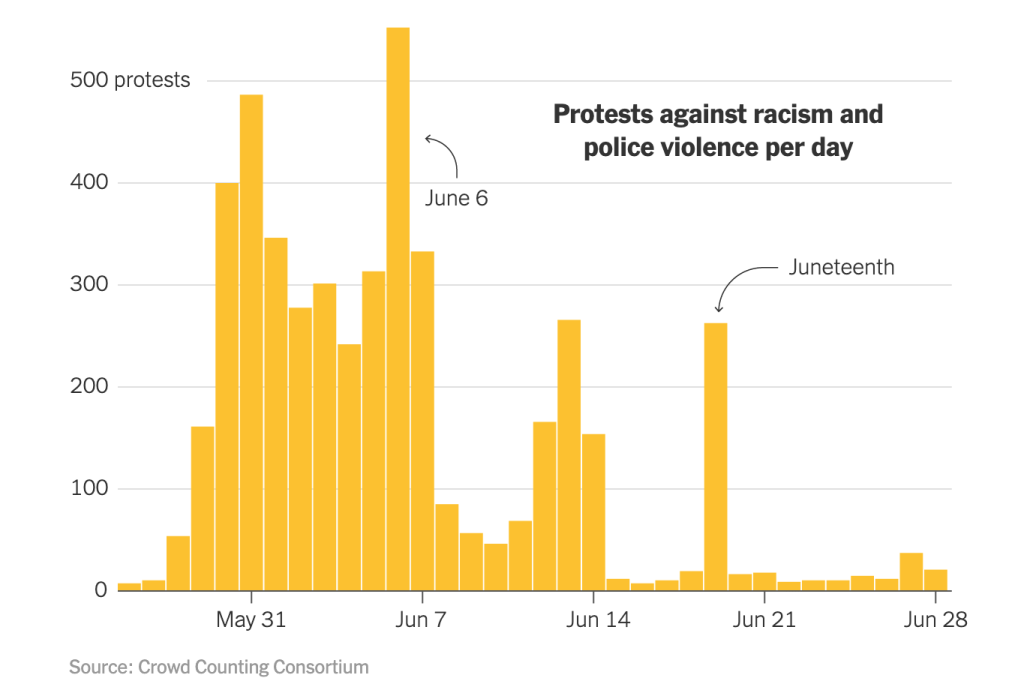
I think when we look at the sheer number of protests that have occurred worldwide, and their huge turnouts the magnitude of the movement comes into context a bit more. Protests have been organised in 60 countries all over the world, spreading every continent; making this very much a worldwide message that is echoing within every corner of the world. The recent protests peaked on June 6th when half a million people turned out in nearly 550 locations across the USA. Four recent polls — including one released four weeks ago by Civis Analytics, a data science firm that works with businesses and Democratic campaigns — suggest that about 15 million to 26 million people in the United States have participated in demonstrations over the death of George Floyd and others in recent weeks. The protests have fought against long term institutionalised racism, and while many remain peaceful some protests have fought against this unjust prejudice in more radical ways. Statues were toppled, police were pressured, and demands of racial justice were bellowed from the streets. In light of these events Martin Luther King’s quote “A Riot is the language of the unheard” is perhaps more relevant than ever. Whilst many have disagreed with some of the actions of protestors it’s these transient actions that have drawn attention to the frustration of the marginalised and caused people to finally understand the seriousness of such discrimination. Sometimes the only way those who have no voice can be heard is through actions and uproar that borderline on the extreme. Throughout the past few months the voice of the oppressed has rightly refused to be suppressed, and as a result created tremendous support for the Black Lives Matter organisation. The protests have expanded a message that is about more than just George Floyd, they have constructed a platform which catalyses a voice of equality. People all over the world have actively tapped into the protests message and demanded genuine action against racial prejudice. A generation that have so frequently been deemed slackers and called lazy have not been afraid to stand up and help push our societies closer to racial justice. People have been conscious enough to see that it isn’t just America with a race problem, whilst they still are respecting Floyd and fighting in his name, countries are beginning to question their own racist police forces and force change for the better through a liberated voice of equality.
This confident voice of liberation hasn’t been limited solely to the protest sphere but instead has morphed into various vocal platforms, making the protests message inescapable. One of the platforms that I think has greatly benefitted the movement is the reaction of the music scene. Throughout history music has always been a viable catalyst for real change. Protest music of the 90’s from artists such as KRS – One, NWA and Public Enemy, were pivotal within civil rights movements, and such an ideology is still relevant today. Artists can use their musical platforms to reach huge audiences, thus, transgressing the marginalised black voice, allowing them to challenge dominant groups and inspire real change. Two artists who have consciously used their music to elevate the BLM protests are both Kanye West and J Cole. Both artists were seen taking part within protest movements and thus it’s no surprise their recent singles have demonstrated an awareness of America’s racial problem. Through bringing the protest conversation into their music it not only amplifies the constructed voice of equality, but it also increases the BLM’s movements potential audience, thus, encouraging more people to help push for real change.
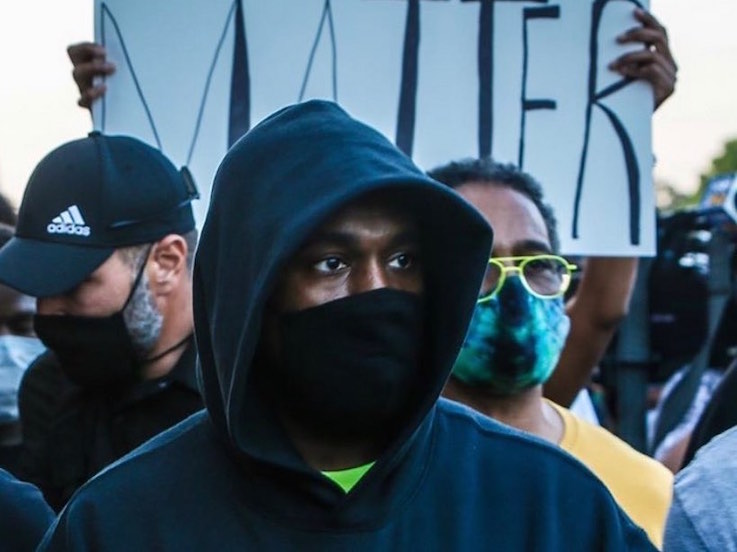
Kanye West has been well known to speak out about racial injustice, such as his infamous quote: “George Bush doesn’t care about black people” on NBCUniversal, and his most recent single, ‘Wash Us In The Blood’, is no different as he tackles issues of racial inequality head on. For me the aspect of the track that shines through most is its unique sound, as Kanye splices together an aesthetic blend of his recent album ‘Jesus Is King’ with the bellowing electronic sounds of his Yeezus era. The booming Yeezus like aesthetic with its high-pitched electronics contrasts with deep, thumping drums and instantly draws the attention of our ears towards the track and his protest raps. Within the pre-chorus we see Kanye make the assertion that the African – American population are frequently trapped within an unfair stereotype, leading to their “Whole life bein thugs”, and thus as a result they have “No choice, sellin’ drugs”. It’s through his unique sound that he grabs our attention, and then through his lyrics he keeps it. Within this utterance Kanye clearly highlights the racist stereotypes and controlling restrictions that African – Americans must deal with. His use of the rhyming couplet emphasises how the stereotype of the black thug, that is so frequently applied within American society, directly leads to the life of selling drugs. The prejudice view of the black thug restricts so many African – Americans from obtaining a job, thus, forcing them into a life of crime, and Kanye intensifies this reality through his rhyming pairing. By placing this social commentary into his music, he details some of the core messages of the BLM movement to his huge audience and raises awareness for issues that his listeners may not have fully understood. Simultaneously the gospel sound of JIK shines through, especially within his religious motifs and psalm samples. Such an aesthetic makes it hard for us to pull our ears away and thus forces us to contemplate Kanye’s themes of equality and justice. The track itself is written almost as a prayer to God, as its form takes that of the gospel, thus subverting the expected Hip-Hop form. In doing so he puts forward a religious solution to the recent racial issues. Throughout the song Kanye repeatedly asks for Christ’s “blood” to rain down upon society and act as a type of religious cleansing, thus, he calls into question the ability of religion to resolve the recent racist demise of America.
J. Cole also released a track recently which explores the racial injustices of America. However, instead of calling into question religions role he questions the ability of celebrities to spread messages of equality. The track is titled ‘Snow on Tha Bluff’ and similar to Kanye, the track takes up an unusual structural form. Cole delivers a single continuous verse within the song that tackles issues facing the United States, such as Police brutality, inequality and racism. His continuous verse structures the song almost as a speech, similar to that of those delivered in the civil rights movement, thus, giving the song an inherent protest aesthetic. Cole uses his celebrity platform to preach messages of equality and simultaneously bring to the light the underlying inequality within America. During the songs second verse Cole utters the line: “I struggle with thoughts on the daily // Feel like a slave that somehow done saved up enough coins to buy his way outta slavery”.As Cole struggles to understand his own fame this line works as a metaphor, mirroring his own life with that of a slave, thus paralleling the modern African American experience to that of the antebellum slave. In using this parallel Cole understands that in reality today’s America still has many aspects of slavery, yet they have simply been modernized. It’s only through his breakthrough into the Hip-Hop scene and celebrity status that he was able to rise out of America’s controlling and discriminatory economic system. Unfortunately, as Cole highlights the African – American is still faced with many oppressive barriers, and often it’s only through extreme wealth that they can buy their modernized escape from institutionalised racism. Additionally, I think that Cole’s use of the songs beat is crucial in his amplification of the BLM voice that has been constructed. The songs beat itself is extremely minimalist and really, it’s the lyrics that are ever present in our ears, driving the track forward. I think this can be seen as being symbolic for the message of the BLM protest. It’s not necessarily about making extensive noise to disrupt the racist agenda, it’s rather about making a conscious voice that puts forward a precise message intended to deconstruct racist perceptions and highlight the inequalities of America. If we compare Cole’s approach to Kanye’s we see two drastically different methods; Cole taking perhaps the more focused path, whilst Kanye unsurprisingly uptakes a more disruptive more all-out approach. We see within Kanye’s track a sound that is more akin to the Civil Rights protests of the 1950’s. His choice of beat blasts our ear canal, giving us a listening experience, we have never had before, thus, forcing our attention to his message. Whilst Cole focuses on creating a particular sound and message, Kanye creates as much noise as possible in order to finally draw our attention towards the issues of the oppressed. Thus, we perhaps are met with two paradoxically different approaches to the BLM movement. However, when we analyse both tracks, despite their juxtaposing sounds, they have the same end goal; ultimately, amplifying the black voice of equality further. They remind us not only that ‘Black Lives Matter’, but that ‘Black Lives Still Matter’ and that ‘Black Lives will always Matter’.
This utilisation of a powerful black voice, not just within protest culture, but within the musical scene, sports industry etc. has already created a positive impact and catalysed real change within America. Due to the persistence and determination of those taking part in the movement legislative changes have been made to stop racialised police brutality. These changes have happened in multiple states across America:
- Minneapolis: Friday 5 June, the City Council agreed to ban the use of chokeholds by police and required officers to report and intervene when they see unauthorised use of force by a colleague.
- Louisville: The Metro Police department has fired one of three officers, Brett Hankison in the fatal shooting of Breonna Taylor.
- Dallas: On June 4, Dallas Chief of Police Renee Hall implemented a new order instructing officers ‘to either stop, or attempt to stop, another employee when force is being inappropriately applied or is no longer required’.
- Maryland: Days after Floyd’s death, Maryland lawmakers said that they were forming a workgroup to address police reform and accountability.
- Los Angeles: The City Council introduce a motion to reduce the LAPD’s $1.8 billion (£1.4bn) operating budget for the coming year.
These are just a few of the initial changes that have already taken place in the wake of the BLM protests. Such progression clearly reveals to us the progressive power and importance of a liberated black voice free from constraints. A change toward a more racially equal society is already happening, however, we cannot let our voices be muffled out by a resurgence of controls and oppression as it perhaps has within the UK. Recently despite their being concreate demands in Britain; such as All Black Lives UK calling for the scrapping of section 60, which gives police the right to stop and search, there have been a total of ZERO legislative changes to counteract racial profiling in the UK. As much as we scapegoat and criticise America, I think we as a nation need to harness their protest characteristics and constructed voice within our own space. England is far from perfect, and yet we act as if we are free of racists in comparison to America.Through looking solely at recent events, the UK’s racist ideologies are still prevalent, thus, change must happen in our own back garden as well.Just recently, on the 4th of August, Premier league footballer Danny Rose spoke out about being ‘regularly stopped’ by police and asked if his ‘car is stolen’. This prejudice event is just one of many that have happened over recent years within the English football scene. Both Raheem Sterling and Antonio Rudiger have been exposed to horrific racial abuse from watching fans. Such examples of racial slurs being used in the UK have been more frequent than perhaps many people expected. A recent YouGov survey revealed that 2/3rd’s of Black Britons have been victim to racial slurs or had people make snap assumptions about them (e.g. “where are you really from”). Some people reading this may still remain ignorant of the UK’s racial issues, perhaps thinking that minority groups in the UK play the ‘race card’ and make too big of a deal out of a passing comment. But how can you in light of the racist media frenzy surrounding Meghan Markle? Such prejudice attitudes were literally front-page news, staring us right in the face, solidifying the UK’s entrenched bigotry. When Meghan married into the Royal family the press began to talk about her “exotic DNA” and even described her as “(almost) straight outta Compton”. Most shockingly well-known DJ Danny Baker compared her child to a monkey; a statement which later got brushed under the carpet as a light-hearted joke. And it’s this tendency to show a blind eye to the evidence that leaves the UK in this stagnated mindset. The coverage of Markle in TV studios around the country remained welcoming as people selectively chose what to highlight. Yes, these comments may not be overt racism, much of it is subtle, played off as sarcasm, but it still works away in the shadows shaping the way people are seen. It stretches across all class constructs, from Royal Family, to Footballer, to the everyday citizen.
Ultimately then, from looking at the aftermath of Floyd’s murder we can see the importance of a unified and purposeful voice of justice. People all over the world have harnessed the movement’s message and amplified it to a level that both respects Floyd yet also moves past this single event. The protest voice has raised awareness for the racial injustice that has unfortunately been present for too long; an injustice that has impacted more than just Floyd. The likes of Sandra Bland, Treyvon Martin, Stephen Lawrence and many more have all been victim to such horrible prejudice. And this recent movement is finally making people listen and making people aware that real change must happen. Especially within America we have witnessed a voice of change that has transcended an oppressive interference and control, thus, subsequently allowing people to freely question their own liberty and expose those institutions that attempt to marginalise certain minorities. The public’s reaction to Floyd’s murder has been almost intoxicating, as demands for racial equality have echoed across multiple industries and every continent. It’s this constructed voice that has helped to create some real change, as I detailed within America. However, racism isn’t an issue that only inflicts America, and those changes that have taken place aren’t enough on their own. We cannot let this idiolect of protest and justice die out as it has so many times prior. Such a voice must be maintained, noise must be made, and a message must be heard. There will never be a place for racism in our societies. And to all those who think otherwise; your voice is not heard.

Written by Sam Mumford
 The Jukebox